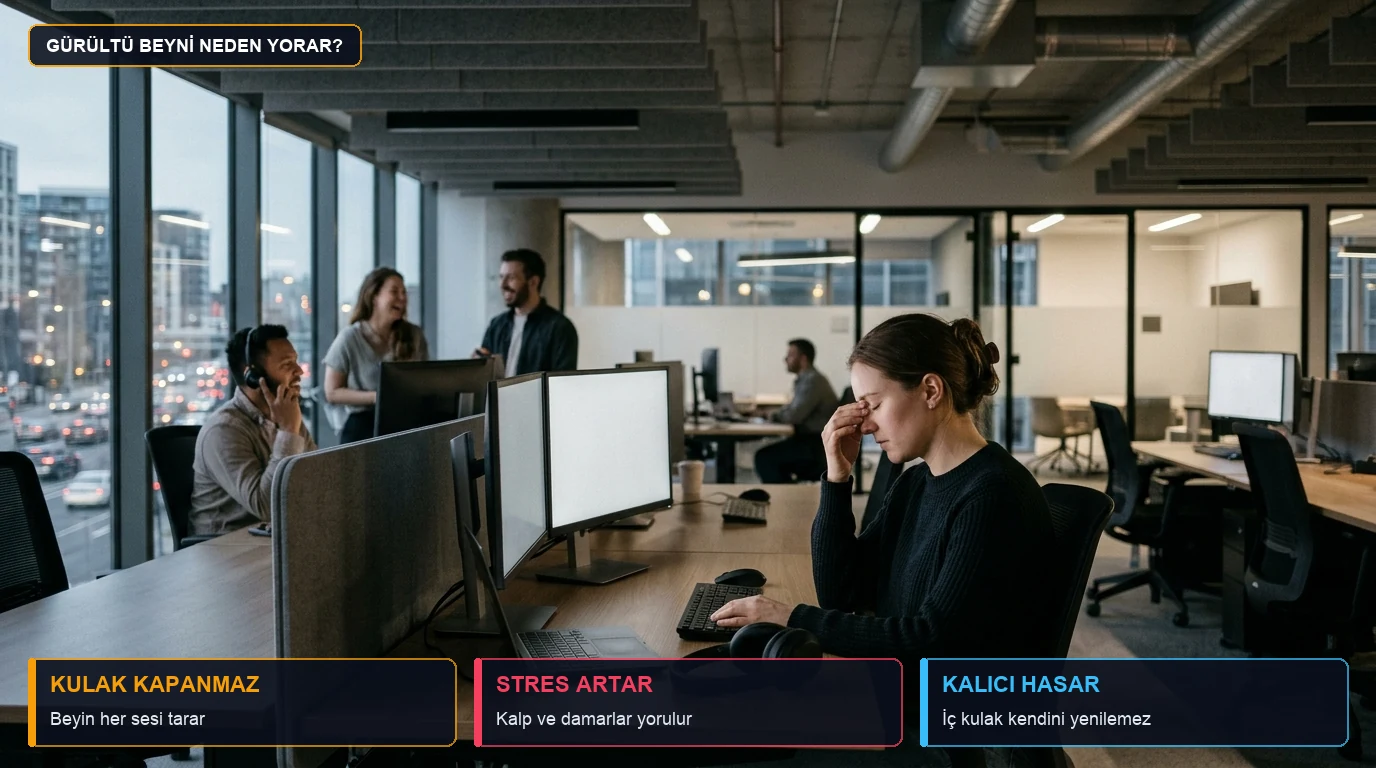
- → Our ears have no eyelids: The auditory cortex involuntarily monitors ambient acoustic fluctuations 24/7, driving cumulative cognitive fatigue by evening (Näätänen et al., 2007).
- → Acoustic noise triggers systemic stress: Chronic traffic and background chatter stimulate sympathetic tone and elevate cortisol, increasing long-term cardiovascular disease risk (Babisch, 2002; Münzel et al., 2018).
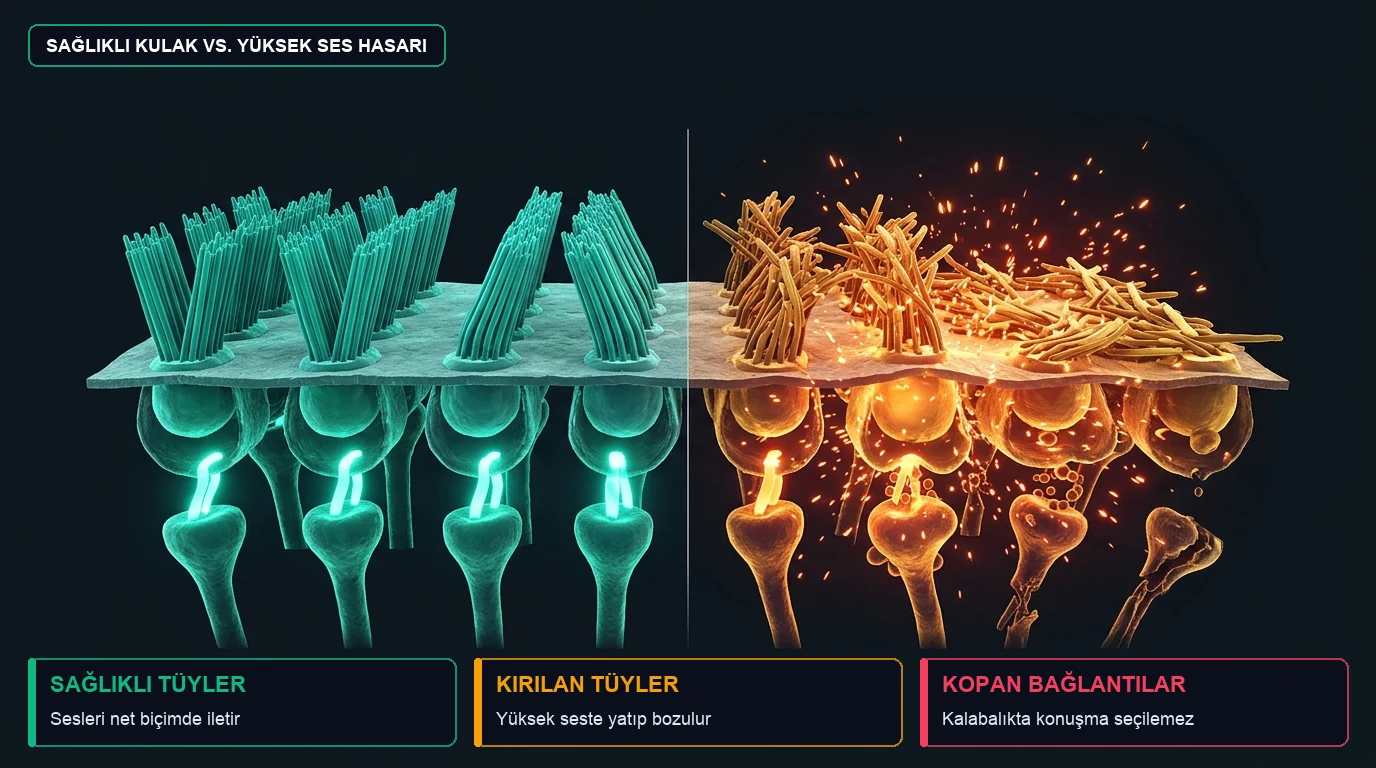
- → Cochlear hair cells do not regenerate: Intense decibel exposure shears sensory stereocilia and severs auditory synapses; even when standard audiograms appear normal, speech discrimination in crowds suffers (Kujawa & Liberman, 2009).
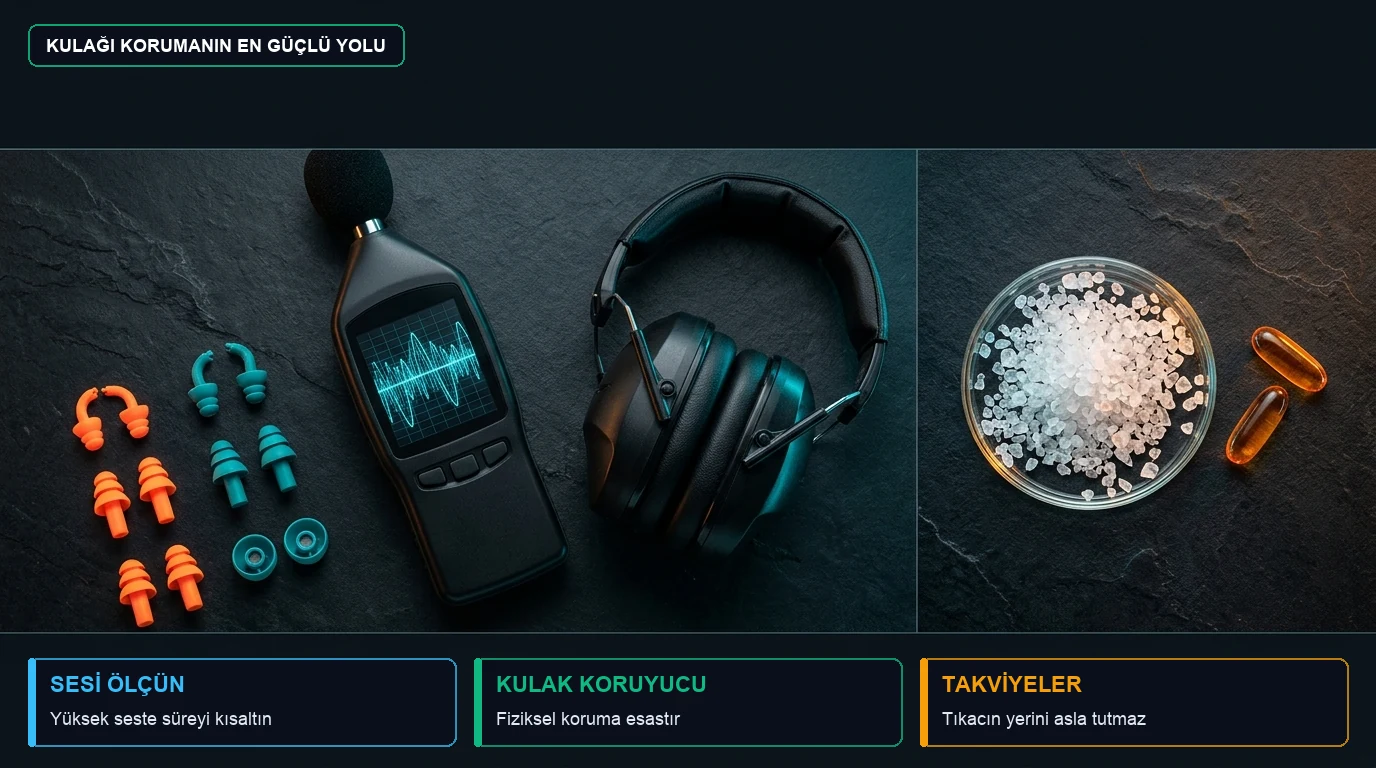
- → Supplements cannot replace physical earplugs: Human evidence for oral magnesium and antioxidants remains modest and inconsistent; true defense requires proper earplug insertion and acoustic shielding (Tikka et al., 2017).
⚠️ Informational Notice: This article provides general educational information based on peer-reviewed scientific literature and does not substitute for clinical examination, audiometry, or medical consultation. If you experience persistent tinnitus, sudden hearing reduction, or acoustic fullness, consult an otolaryngologist (ENT specialist). If you take prescription medications, consult your physician before starting any dietary supplement.
In Brief
- While we can close our eyes to block visual input, we cannot close our ears; the brain actively processes soundscapes even during deep sleep [3, 4].
- In occupational environments, hearing protection should be made available at 80 decibels (dB) and is mandatory at and above 85 dB [15].
- Chronic nocturnal traffic noise elevates vascular and neuroendocrine stress markers, even if you do not consciously wake up [4, 14].
- Evidence for biochemical hearing shields (such as magnesium or antioxidants) remains modest; no pill can replace a properly fitted physical earplug [8, 10, 13].
Does This Sound Familiar?
You spent your entire day seated at a desk, lifting nothing heavier than a coffee mug. Yet when you return home in the evening, your head feels heavy, your patience is razor-thin, and your only craving is complete, uninterrupted silence.
Most knowledge workers attribute this deep exhaustion strictly to screen glare or workload intensity. However, the relentless low-frequency hum of ventilation, overlapping phone conversations across an open-plan office, and distant street traffic are quietly taxing your central nervous system.
According to data from the UK Health and Safety Executive (HSE), approximately 15,000 workers annually report work-related hearing impairments [1]. Their industrial campaign highlighted that roughly one in five workers faces potentially harmful noise exposures across modern workplaces [2].
In this guide, we break down why environmental noise tires the brain, what acoustic trauma does to inner ear architecture, and how to shield yourself using verifiable science.
1. Decibel Physics: How Sound Energy Escalates
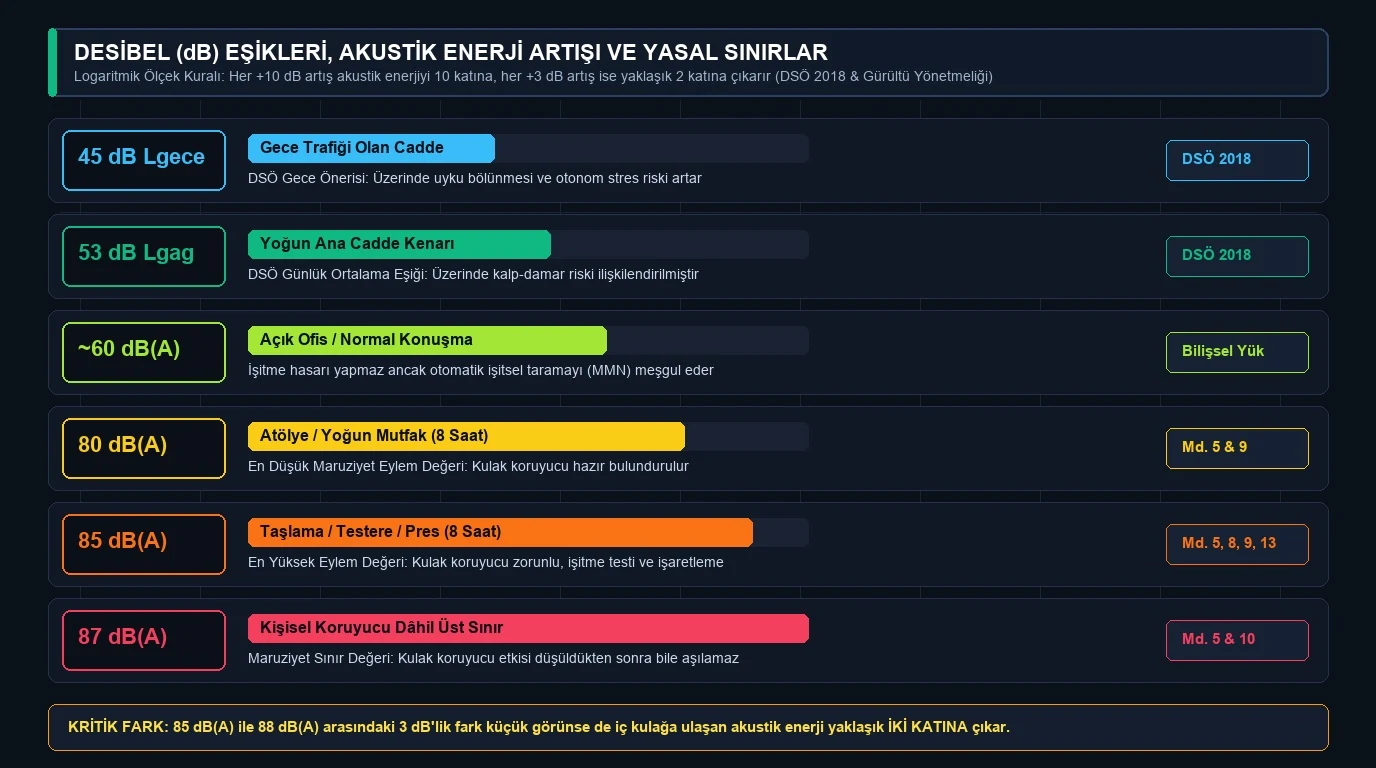
Sound intensity is measured in decibels (dB) on a logarithmic scale rather than a linear one. Because of this logarithmic progression, an increase of merely 3 dB doubles the acoustic sound energy hitting your eardrum.
This means the jump from 85 dB to 88 dB may sound only marginally louder to subjective perception, but the physical energy load delivered into your cochlea is doubled. A 10 dB jump represents a tenfold increase in acoustic energy.
| Acoustic Level | Everyday Real-World Example | Physiological Impact & Regulatory Threshold |
|---|---|---|
| 45 dB (nighttime average) | Quiet residential street with night traffic | WHO nocturnal threshold; levels above this fragment sleep architecture [14]. |
| 53 dB (daytime average) | Moderate urban road traffic | WHO daytime guideline; long-term exposure increases cardiovascular risk [14]. |
| 60 dB | Open-plan office, standard conversational volume | Does not cause cochlear damage but provokes cognitive distraction [3]. |
| 80 dB (8-hour shift) | Noisy mechanical workshop, commercial kitchen | Lower exposure action value; employers must provide hearing protection [15]. |
| 85 dB (8-hour shift) | Angle grinding, power saw, industrial punch press | Upper exposure action value; ear protection and audiometry are legally mandatory [15]. |
| 87 dB (8-hour shift) | Severe heavy industrial noise | Exposure limit value that must never be exceeded inside the ear canal [15]. |
2. Why the Brain Cannot Switch Off Sound
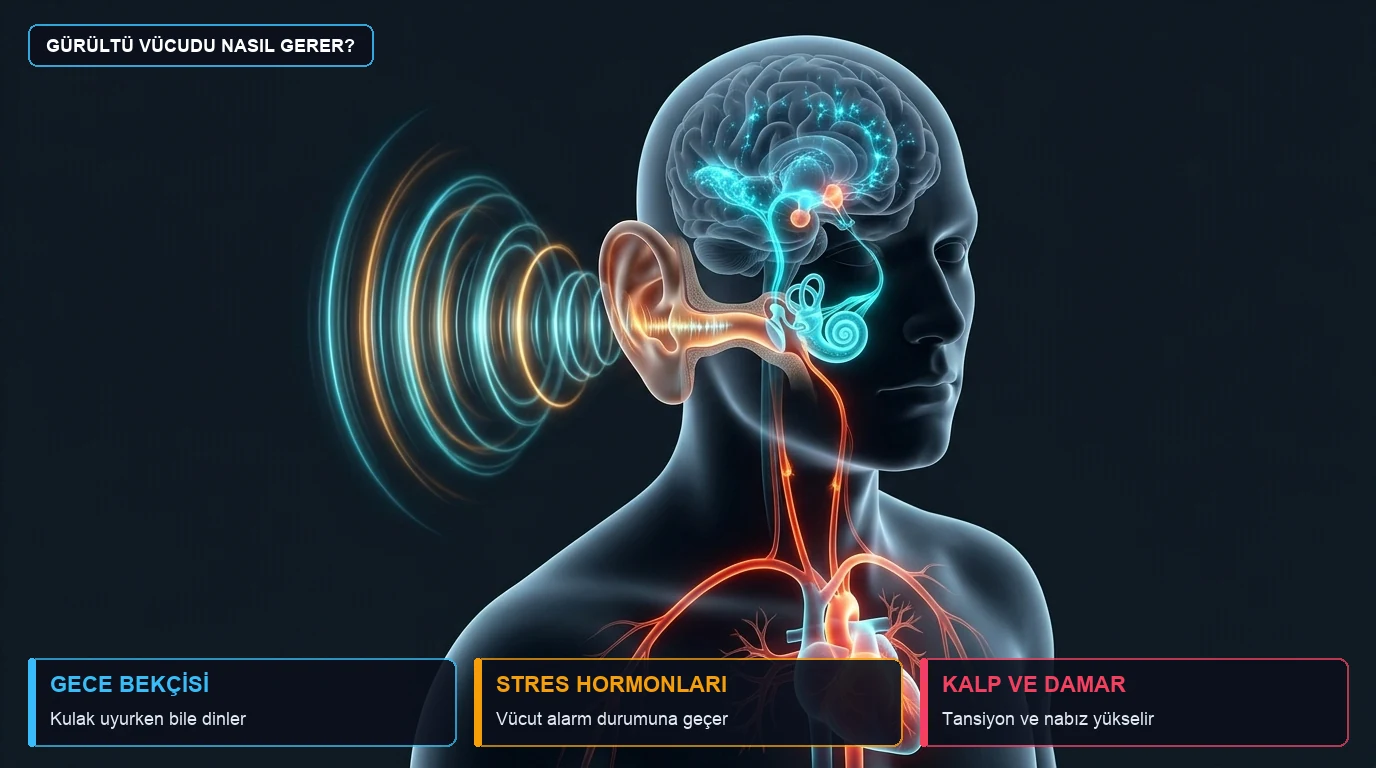
Closing our eyelids shuts out visual stimulation instantly. But our ears have no anatomical shutters; the auditory pathway acts as an ever-vigilant biological night watchman.
Involuntary Sensory Gating: Mismatch Negativity
Pioneering neuroscientist Risto Näätänen and colleagues demonstrated that human auditory cortex continuously evaluates ambient acoustic changes completely involuntarily [3]. Cognitive electrophysiologists term this automated cortical detection signature Mismatch Negativity (MMN).
Evolutionarily, this automated alert system preserved human life by detecting predators in the dark. However, in a contemporary open-plan workplace, sudden laughter across the room or a shrill ringtone repeatedly triggers MMN, tearing cognitive bandwidth away from deep work [3].
“I Got Used to It”: The Illusion of Adaptation
Epidemiological and physiological research by Wolfgang Babisch and Thomas Münzel from the University of Mainz shows that chronic noise activates systemic neuroendocrine stress cascades [4, 5]. When subjected to background rumble, the brain interprets persistent noise as an environmental stressor, releasing cortisol and catecholamines (adrenaline) into the bloodstream.
Over months and years, this sustained sympathetic tone promotes endothelial dysfunction, vascular stiffness, and elevated hypertension and stroke risk [4, 5]. Saying “I don’t even hear the highway anymore” merely reflects conscious habituation; your autonomic vascular system continues to mount a physiological stress response [4].
The Most Insidious Threat: Nocturnal Traffic
Acoustic disruption inflicts its most severe systemic damage during sleep [4, 14]. When vehicles pass your bedroom window at night, your autonomic nervous system experiences micro-arousals even if you never wake up to conscious awareness.
Heart rate surges, cortical slow-wave sleep is truncated, and endothelial nitric oxide availability drops [4]. This is why the World Health Organization strongly advises keeping nocturnal road noise exposure outside bedrooms strictly below 45 dB [14].

3. Why the Inner Ear Cannot Self-Regenerate
Inside our cochlea (the snail-shaped fluid chamber of the inner ear) reside thousands of specialized sensory hair cells [6]. These stereocilia bundles can be visualized as a pristine field of tall wheat waving gently in a breeze.
Under normal acoustic loads, stereocilia deflect gracefully and spring back into position. However, prolonged or acute exposure to excessive decibels hits the cochlea like an acoustic hurricane, shearing stereocilia and generating catastrophic local reactive oxygen species (ROS) and oxidative stress [6].
In mammals and humans, these delicate mechanoreceptor hair cells cannot divide or regenerate once lost [6]. A cut on your skin forms new cells, but inner ear hair cells possess zero regenerative capacity.
Hidden Hearing Loss: When Audiograms Lie
Breakthrough research by Sharon Kujawa and Charles Liberman at Harvard Medical School uncovered a crucial clinical reality [7]. Following high-noise exposures, the initial temporary threshold shift (ringing and muffled sound) may fade, and standard tone audiograms return to “normal.”
However, histopathological studies show that even when hair cells survive, the delicate synaptic ribbons connecting hair cells to spiral ganglion auditory nerve fibers can be permanently destroyed [7]. This produces the classic real-world complaint: You can easily hear quiet tones in a soundproof doctor’s booth, but you cannot decipher a single sentence inside a noisy dining hall.
4. Acoustic PPE vs. Supplements: What Does Science Say?
When evaluating auditory preservation, clinical consensus is unequivocal: Physical noise mitigation and correct PPE usage are paramount [13, 15].
Proper Insertion Doubles Earplug Effectiveness
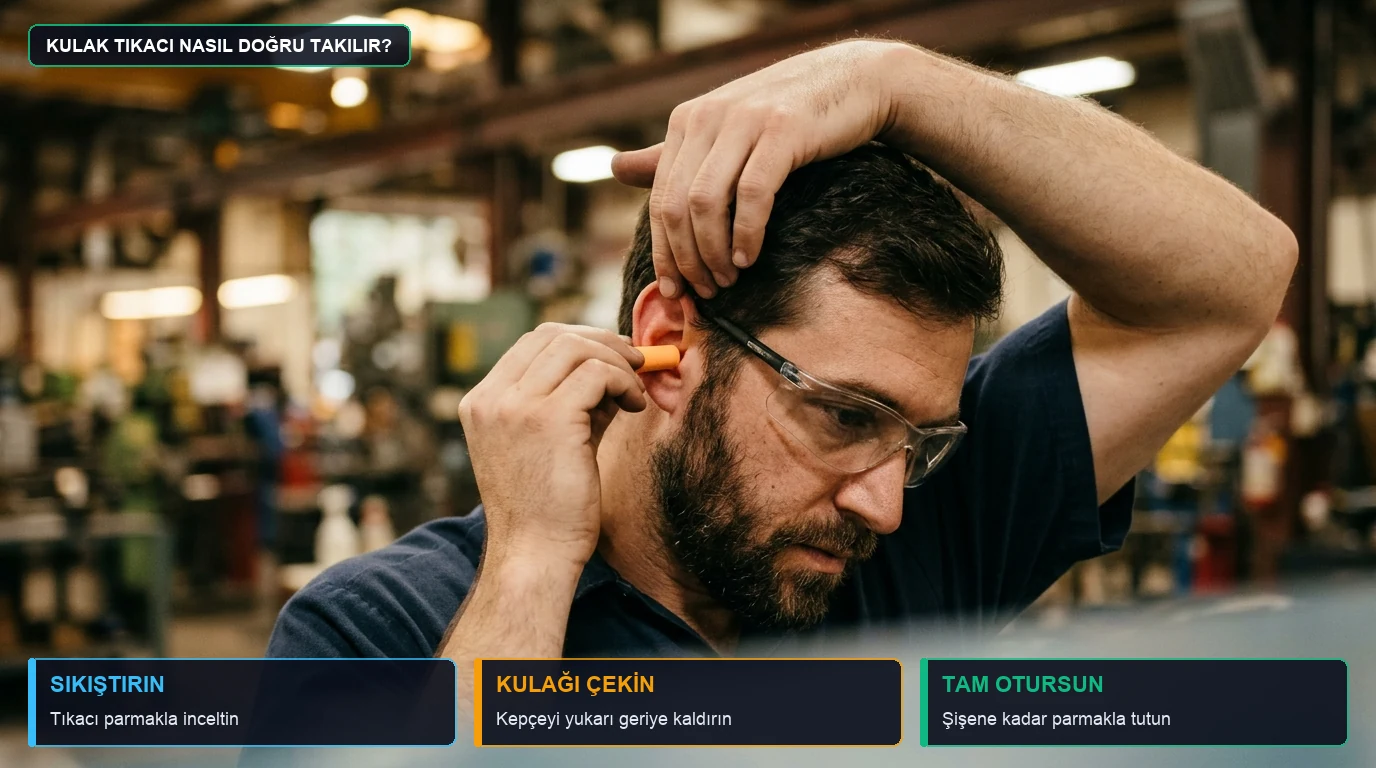
Many people casually push foam earplugs into the outer ear canal, leaving most of the plug protruding, and assume they are shielded. A comprehensive Cochrane systematic review revealed that formal training on correct earplug insertion drastically increases real-world attenuation [13].
The gold-standard technique takes just seconds: Roll the foam plug down into a narrow crease-free cylinder, reach over your head with the opposite hand to pull the ear up and back (straightening the ear canal), insert the compressed plug deeply, and hold it in place with a finger until it fully expands [13]. For offices and flights, Active Noise Cancelling (ANC) headphones effectively dampen low-frequency continuous rumble, reducing cognitive strain, though they are not certified for industrial impact noise.
Do Oral Hearing Supplements Work?
Because noise-induced cochlear damage involves reactive oxygen species and glutamate excitotoxicity, researchers have evaluated compounds such as magnesium, N-acetylcysteine (NAC), and coenzyme Q10. However, human clinical trials demonstrate mixed and modest results:
| Compound | Findings in Human Clinical Trials | Clinical Confidence & Dosages |
|---|---|---|
| Magnesium | In a randomized trial with 300 military recruits during firing practice, daily magnesium drink supplementation reduced permanent threshold shifts [8]. | 🟡 Emerging (167 mg elemental magnesium daily) [8] |
| N-Acetylcysteine (NAC) | Showed minor protective effects in industrial textile workers [9], but a large military trial in US Marines found no statistically significant benefit [10]. A meta-analysis of 5 trials noted a marginal 3.4 dB threshold benefit [11]. | 🟡 Emerging (1,200–2,700 mg daily) [9, 10, 11] |
| Coenzyme Q10 | A single non-controlled study of 30 patients reported accelerated recovery from acute acoustic trauma [12]. | 🔴 Inadequate (lacks rigorous controlled human trials) [12] |
Pharmacological Safety and Interactions:
- Magnesium: Daily supplemental intake should not exceed 350 mg daily from supplements in healthy adults; excess amounts cause gastrointestinal cramping and diarrhea [16]. Separate magnesium by at least 2 hours from bisphosphonates and fluoroquinolone or tetracycline antibiotics; patients with renal impairment must consult their doctor [16].
- N-Acetylcysteine (NAC): May cause nausea and gastrointestinal irritation [10]. Co-administration with nitrates and nitroglycerin can induce severe hypotension and throbbing headaches; asthma patients must use under medical supervision.
- Coenzyme Q10: May alter anticoagulant response in patients on warfarin and can additively lower blood pressure when taken alongside antihypertensives [17].
5. What Can You Do? 4 Practical Acoustic Action Steps
- 1. Cap personal audio volume at 60%: When using in-ear buds, never exceed 60% of maximum volume and allow a 10-minute silence break every hour [14].
- 2. Master the foam earplug insertion technique: When operating lawn mowers, drills, or entering >80 dB spaces, roll the plug thin, pull your ear upward, and insert fully [13, 15].
- 3. Neutralize background rumble during cognitive focus: Use ANC headphones in open-plan offices and transport to suppress continuous low-frequency hum.
- 4. Acoustic-proof your sleeping sanctuary: If your bedroom faces urban traffic, orient your bed away from windows, use acoustic drapery, or wear soft silicone sleep plugs [4, 14].
The simplest and most immediate intervention is Step 1: Open your phone settings right now and set your headphone audio safety limit to 60%. This single hardware boundary permanently eliminates the risk of accidentally delivering damaging acoustic power into your inner ear.
Related Guides
- Discover how excessive cognitive multitasking depletes mental stamina in Why Can’t We See What’s Right in Front of Us? Inattentional Blindness & Human Error.
- Learn about bioavailability differences across compounds in our Complete Guide to Magnesium Forms & Bioavailability.
- Learn how habit loops and digital delays shape cognitive pacing in Digital Waiting Latency, Attention Residue, and Habit Neurobiology.
Scientific Evidence & Clinical Confidence
| Finding / Principle | Evidence Level |
|---|---|
| Prolonged occupational noise above 85 dB induces irreversible sensorineural hearing loss | 🟢 Strong Evidence |
| Chronic nocturnal traffic and aircraft noise increases cardiovascular and hypertensive disease risk | 🟢 Strong Evidence |
| Formal earplug insertion training significantly enhances real-world acoustic attenuation | 🟡 Emerging |
| Noise-induced cochlear synaptopathy causes hidden hearing loss despite normal pure-tone thresholds | 🟡 Emerging |
| Magnesium and N-acetylcysteine mitigate acute acoustic threshold shifts | 🟡 Emerging |
| Coenzyme Q10 alone reverses acoustic trauma or pink noise reliably boosts sustained productivity | 🔴 Inadequate |
💡 Understanding Evidence Levels:
- 🟢 Strong: Confirmed by multiple independent human randomized controlled trials, large cohorts, and consensus guidelines.
- 🟡 Emerging: Backed by smaller cohorts or promising preliminary clinical trials requiring broader validation.
- 🔴 Inadequate: Lacking robust human clinical validation, conflicting, or observed solely in animal or laboratory models.
Frequently Asked Questions
At what decibel level does acoustic damage begin?
Occupational guidelines mandate hearing protection at 85 dB for an 8-hour shift, with 80 dB serving as the initial warning action threshold [15]. For cardiovascular health and restorative sleep, the World Health Organization recommends keeping daytime road traffic exposure below 53 dB and nighttime bedroom noise below 45 dB [14].
Do active noise-cancelling (ANC) headphones prevent hearing loss?
ANC headphones are excellent for reducing continuous low-frequency hum (such as office AC, jet engines, and transit rumble), thereby reducing mental fatigue and allowing lower listening volumes. However, they are not certified personal protective equipment (PPE) and must not replace industrial hearing protectors in construction or manufacturing settings [15].
My hearing test is normal, but I struggle to follow conversations in restaurants; why?
This is known as “hidden hearing loss” (cochlear synaptopathy) [7]. Excessive decibel exposure can destroy the delicate synaptic connections between hair cells and the auditory nerve even when hair cells remain intact. Pure-tone beeps in a silent booth sound fine, but the brain cannot separate complex speech streams in noisy rooms [7].
Can magnesium or antioxidant pills prevent tinnitus and acoustic trauma?
While clinical trials with oral magnesium (167 mg daily) and N-acetylcysteine show modest reductions in temporary threshold shifts, the scientific evidence remains mixed [8, 9, 10]. Supplements cannot prevent physical mechanical destruction of cochlear stereocilia; physical noise reduction and properly fitted earplugs remain the indispensable first line of defense.
Conclusion
Acoustic fatigue is not merely an occupational hazard for airport ground crews and machine operators; low-grade open-office chatter and nocturnal highway rumble silently stress the auditory cortex, disrupt sleep, and drive cardiovascular strain. Fortunately, the most effective protection is also the simplest: measure sound, cap headphone volume, insulate your sleep environment, and wear certified earplugs correctly whenever decibels spike.
Last Updated: October 2026
References & Peer-Reviewed Sources
- [1] Health and Safety Executive (HSE). Noise induced hearing loss in Great Britain (LFS 2022/23–2024/25; IIDB 2024). hse.gov.uk/statistics/causdis/deafness
- [2] Health and Safety Executive (HSE). “Noise and vibration: HSE warns employers not to wait until the damage is done.” Press release, October 2026. press.hse.gov.uk
- [3] Näätänen, R., Paavilainen, P., Rinne, T., & Alho, K. (2007). “The mismatch negativity (MMN) in basic research of central auditory processing: A review.” Clinical Neurophysiology, 118(12), 2544–2590. DOI: 10.1016/j.clinph.2007.04.026
- [4] Münzel, T., Schmidt, F. P., Steven, S., Herzog, J., Daiber, A., & Sørensen, M. (2018). “Environmental Noise and the Cardiovascular System.” Journal of the American College of Cardiology, 71(6), 688–697. DOI: 10.1016/j.jacc.2017.12.015
- [5] Babisch, W. (2002). “The Noise/Stress Concept, Risk Assessment and Research Needs.” Noise & Health, 4(16), 1–11. PubMed: 12537836
- [6] Kurabi, A., Keithley, E. M., Housley, G. D., Ryan, A. F., & Wong, A. C.-Y. (2017). “Cellular mechanisms of noise-induced hearing loss.” Hearing Research, 349, 129–137. DOI: 10.1016/j.heares.2016.11.013
- [7] Kujawa, S. G., & Liberman, M. C. (2009). “Adding insult to injury: cochlear nerve degeneration after ‘temporary’ noise-induced hearing loss.” Journal of Neuroscience, 29(45), 14077–14085. DOI: 10.1523/JNEUROSCI.2845-09.2009
- [8] Attias, J., Weisz, G., Almog, S., et al. (1994). “Oral magnesium intake reduces permanent hearing loss induced by noise exposure.” American Journal of Otolaryngology, 15(1), 26–32. DOI: 10.1016/0196-0709(94)90036-1
- [9] Lin, C. Y., Wu, J. L., Shih, T. S., et al. (2010). “N-Acetyl-cysteine against noise-induced temporary threshold shift in male workers.” Hearing Research, 269(1–2), 42–47. DOI: 10.1016/j.heares.2010.07.005
- [10] Kopke, R., Slade, M. D., Jackson, R., et al. (2015). “Efficacy and safety of N-acetylcysteine in prevention of noise induced hearing loss: A randomized clinical trial.” Hearing Research, 323, 40–50. DOI: 10.1016/j.heares.2015.01.002
- [11] Chang, P. H., Liu, C. W., Hung, S. H., & Kang, Y. N. (2022). “Effect of N-acetyl-cysteine in prevention of noise-induced hearing loss: a systematic review and meta-analysis of randomized controlled trials.” Archives of Medical Science, 18(6), 1535–1541. DOI: 10.5114/aoms/109126
- [12] Staffa, P., Cambi, J., Mezzedimi, C., Passali, D., & Bellussi, L. (2014). “Activity of coenzyme Q10 (Q-Ter multicomposite) on recovery time in noise-induced hearing loss.” Noise & Health, 16(72), 265–269. DOI: 10.4103/1463-1741.140499
- [13] Tikka, C., Verbeek, J. H., Kateman, E., Morata, T. C., Dreschler, W. A., & Ferrite, S. (2017). “Interventions to prevent occupational noise-induced hearing loss.” Cochrane Database of Systematic Reviews, CD006396. DOI: 10.1002/14651858.CD006396.pub4
- [14] World Health Organization (WHO) Regional Office for Europe. Environmental Noise Guidelines for the European Region (2018). who.int
- [15] Directive 2003/10/EC of the European Parliament and of the Council on the minimum health and safety requirements regarding the exposure of workers to the risks arising from physical agents (noise).
- [16] NIH Office of Dietary Supplements. Magnesium — Fact Sheet for Health Professionals. ods.od.nih.gov
- [17] NIH National Center for Complementary and Integrative Health (NCCIH). Coenzyme Q10. nccih.nih.gov
For informational purposes only; consult a physician for medical diagnosis or treatment.