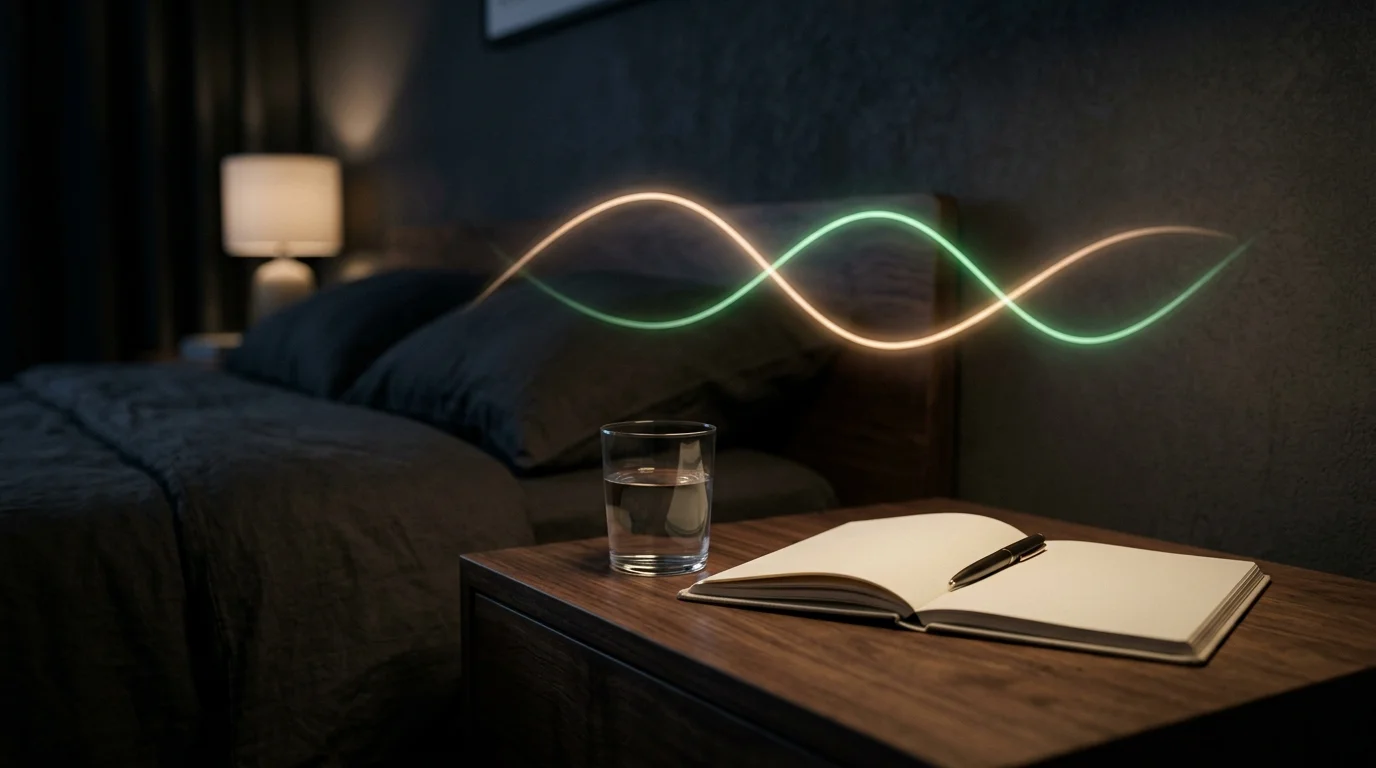
- → Two-Process Sleep Model: Sleep is triggered at the intersection of circadian timing (Process C) and homeostatic adenosine sleep pressure (Process S); both operate as independent, synchronized biological clocks.
- → Caffeine Masks Rather Than Postpones Sleep: Caffeine does not eliminate adenosine; it competitively blocks adenosine receptors, concealing fatigue signals. When this blockade clears, accumulated adenosine binds en masse, causing a 'caffeine crash'.
- → Deep Sleep as Brain Waste Clearance: During NREM Stage 3/4, the glymphatic system activates, cerebrospinal fluid flow surges, and metabolic waste products like beta-amyloid are flushed away far faster than during wakefulness.
- → REM Serves as 'Overnight Therapy': In REM sleep, noradrenaline release is suppressed, allowing the amygdala to reprocess emotionally charged memories in a neurochemically calm state, decreasing emotional reactivity the next day.
- → Waking Early Selectively Deprives REM: Deep slow-wave sleep predominates during the first half of the night, whereas REM clusters toward morning; waking up too early strips away a disproportionate fraction of your REM sleep.
⚠️ Important Medical Disclaimer: This review cross-examines the theses presented in neuroscientist Matthew Walker’s Why We Sleep against peer-reviewed scientific literature. If you suffer from clinical insomnia, obstructive sleep apnea, or circadian rhythm sleep-wake disorders, consult a certified somnologist or sleep specialist.
What Does This Review Cover?
Published in 2017 by Matthew Walker, Professor of Neuroscience and Psychology at the University of California, Berkeley, Why We Sleep brought two decades of sleep research and over a hundred peer-reviewed publications into mainstream science communication. Walker’s central thesis is straightforward: sleep is not an inconvenient byproduct of waking life or a passive downtime. It is an active, biochemically demanding biological maintenance process that recalibrates nearly every major system in the human brain and body.
At a time when the World Health Organization (WHO) has highlighted a silent “sleep-loss epidemic” across industrialized nations, Walker’s work provides a rigorous biological framework for evening digital sunsets and dimming artificial lighting. Dimming screens early in the evening is not merely a lifestyle habit; it is a physiological necessity that allows the master circadian clock to initiate pineal melatonin synthesis without photonic interference.
In this review, we examine the four primary scientific claims of the book, cross-verifying them against primary literature:
- The Two-Process Sleep Model: How circadian oscillations and homeostatic adenosine accumulation interact.
- Caffeine Pharmacokinetics: Why caffeine masks fatigue rather than restoring cellular energy.
- Deep Sleep Architecture (NREM Stage 3/4): Glymphatic waste clearance and memory consolidation.
- REM Sleep Functionality: Emotional regulation, trauma attenuation, and creative problem solving.
1. The Two Engines of Sleep Architecture: Circadian Rhythm and Sleep Pressure
The scientific backbone of Walker’s framework rests upon the Two-Process Model of Sleep Regulation, first formalized by Swiss chronobiologist Alexander Borbély in 1982 [1]. According to this model, the biological drive to sleep emerges from the alignment of two distinct, interacting physiological mechanisms:
Orchestrated by the master pacemaker, the Suprachiasmatic Nucleus (SCN) in the anterior hypothalamus. It dictates the 24-hour rhythmic oscillation of alertness and sleepiness, continuously entrained by environmental zeitgebers, predominantly short-wavelength blue light.
Accumulates continuously as a direct metabolic byproduct of waking cellular activity in the brain, driven primarily by the extracellular concentration of adenosine. As adenosine builds up in the basal forebrain and cortex, subjective sleepiness escalates monotonically.
Under physiological conditions, the simultaneous peak of these two processes—the circadian clock signaling nocturnal rest while adenosine accumulation reaches its daily zenith—facilitates rapid, uninterrupted sleep onset. Shift work, transatlantic travel (jet lag), or erratic sleep schedules decouple Process C from Process S, producing the frustrating “tired but wired” state where sleep pressure is high but the circadian phase fails to support sleep maintenance.
2. Caffeine Metabolism: Adenosine Receptor Blockade and Borrowed Alertness
One of the most practically relevant and frequently misunderstood sections of Why We Sleep addresses caffeine pharmacodynamics. Contrary to popular belief, caffeine does not supply metabolic energy; it acts as a non-selective competitive antagonist at adenosine A1 and A2A receptors in the central nervous system.
Caffeine ➔ Creates Cellular Energy and Eradicates Fatigue
Caffeine ➔ Competitively Blocks Adenosine Receptors ➔ Sleep Pressure Signal Is Masked From the Cortex ➔ Adenosine Continues to Accumulate in Extracellular Fluid
In human hepatic metabolism via cytochrome P450 1A2 (CYP1A2), caffeine exhibits an average elimination half-life of 5 to 6 hours, with a quarter-life extending up to 10 to 12 hours. Consequently, a cup of coffee consumed at 3:00 PM leaves approximately 25% of its psychoactive compound active in brain receptors at midnight. In a randomized controlled study, even a standard dose of caffeine administered 6 hours prior to bedtime produced statistically significant reductions in total sleep time and slow-wave depth [2].
📌 The Caffeine Crash Mechanism:
Once hepatic enzymes clear caffeine from the synaptic cleft, the receptor blockade dissolves. The unhindered, accumulated pool of adenosine binds simultaneously to vacant receptors, triggering an acute, intensified surge of fatigue known as the “caffeine crash.”
3. Deep Sleep (NREM Stage 3/4): Glymphatic Clearance and Memory Consolidation
Human sleep cycles repeat every 90 to 110 minutes, cycling through light NREM (Stages 1 and 2), deep slow-wave NREM (Stages 3 and 4), and REM sleep. Slow-wave deep sleep is heavily front-loaded in the first half of the night and fulfills two indispensable physiological functions:
3.1. The Glymphatic System: The Brain’s Night Shift Sanitation
A seminal murine study published in Science demonstrated that during slow-wave sleep, interstitial space volume in brain tissue expands by up to 60%, accelerating the convective influx of cerebrospinal fluid (CSF) through parenchymal tissue by more than tenfold compared to the waking state [3]. This astroglial-mediated “glymphatic” flux facilitates the rapid clearance of neurotoxic metabolic waste products, notably beta-amyloid and hyperphosphorylated tau proteins. While direct real-time fluid assays in living human brains remain technically challenging, neuroimaging investigations strongly confirm an analogous mechanism.
3.2. Hippocampal-Neocortical Dialogue: Memory Backup and Tri-Coupling
Deep slow-wave oscillations (<1 Hz), thalamocortical sleep spindles (11–16 Hz), and hippocampal sharp-wave ripples (150–250 Hz) become phase-locked in temporal synchrony. This tri-coupling coordinates the systematic transfer of episodic memory traces from temporary storage in the hippocampus to stable, long-term distributed networks across the neocortex [4]. When beta-amyloid accumulation degrades slow-wave amplitudes, this overnight memory consolidation process deteriorates measurably—revealing a direct mechanistic link between chronic sleep disruption and accelerated neurodegenerative risk [4].
4. REM Sleep: “Overnight Therapy” and Affective Calibration
During the second half of the night, sleep architecture shifts predominantly toward Rapid Eye Movement (REM) sleep. During REM, electroencephalographic (EEG) patterns closely resemble active wakefulness, accompanied by complete muscular flaccidity (REM atonia)—an evolutionary safeguard that prevents physical enactment of dreams.
In a comprehensive review co-authored with Eti van der Helm at UC Berkeley, Walker conceptualized REM sleep as a nocturnal “overnight therapy session” [5]. During REM, central concentrations of the principal stress neuromodulator noradrenaline drop to near-zero levels. This neurochemically tranquil environment enables the amygdala and hippocampus to reactivate and process affective memories without triggering visceral stress responses. The result is crucial: the informational content of the experience is consolidated, while its acute, visceral emotional charge is stripped away.
A second distinct hallmark of REM sleep is hyper-associative cognitive processing. The brain’s capacity to synthesize distant, non-obvious conceptual links peaks during this phase. Empirical research demonstrates that naps containing REM sleep produce dramatic performance gains on creative association tasks compared to equivalent periods of quiet wakefulness or non-REM sleep [6].
5. The 90-Minute Cycle: Why Waking Up Early Selectively Steals REM Sleep
Dominated by Slow-Wave Deep NREM (Stages 3/4) — glymphatic waste clearance and systemic growth hormone surges peak during this interval.
REM episodes lengthen progressively — emotional integration, mood stability, and creative neural consolidation concentrate here.
This structural asymmetry yields a critical clinical takeaway: truncating your sleep by setting an aggressive early morning alarm does not merely reduce total sleep by 20%; it selectively deprives you of up to 60% to 70% of your total REM sleep, because REM episodes are clustered in those final hours. Conversely, delaying bedtime until late in the night curtails slow-wave deep sleep, compromising restorative glymphatic clearance.
Comparative Matrix: Chronic Sleep Restriction vs. Full Restorative Sleep
| Biological Parameter | Chronic Sleep Restriction (<6–7 Hours) | Restorative Sleep (7–9 Hours, Full Architecture) |
|---|---|---|
| Cardiovascular Risk | Marked elevation in coronary heart disease, stroke, and cardiovascular mortality [7] | Baseline cardiovascular profile maintained at normal population benchmarks |
| Metabolic Balance | Leptin declines, ghrelin elevates; persistent hyperphagia and cravings [8] | Balanced satiety and hunger signaling pathways |
| Neurotoxic Clearance | Suppressed glymphatic flux, accelerating beta-amyloid accumulation [3] | Efficient cyclic clearance of interstitial metabolic waste |
| Emotional Regulation | Heightened amygdala reactivity and blunted prefrontal top-down inhibition [5] | REM-mediated affective recalibration preserves emotional equilibrium |
| Immune Surveillance | Profound suppression of natural killer (NK) cell cytolytic activity [12] | Sustained cytotoxic immune defense and cellular repair capacity |
6. Actionable Protocol: Evidence-Based Sleep Biohacking
Beyond theoretical neurobiology, Walker outlines practical lifestyle interventions for optimizing sleep quality. Here are the five highest-yield recommendations supported by primary research:
- 1. Strict Schedule Consistency: Maintain fixed bed and wake times seven days a week to prevent "social jet lag." Chronobiological phase shifting between weekdays and weekends has been directly linked to metabolic dysregulation and adiposity [9].
- 2. Caffeine Curfew: Establish a strict caffeine cut-off at least 8 to 10 hours prior to bedtime, allowing hepatic clearance to minimize residual adenosine receptor antagonism.
- 3. Circadian Photoprotection and Thermal Cooling: Eliminate screen exposure 60 to 90 minutes before bed. Ambient thermal environment exerts a direct regulatory effect on sleep stages [10]; keeping bedroom temperatures cool (~18–19°C / 65–67°F) facilitates core temperature drop, promoting deep NREM onset.
- 4. Eliminate Alcohol as a Sleep Aid: While ethanol accelerates sleep induction through GABAergic sedation, it severely fragments sleep architecture and potently suppresses REM sleep throughout the night [11].
- 5. Morning Sunlight Entrainment: Expose your eyes to outdoor sunlight within 30 minutes of waking. Natural lux levels reset SCN clock genes and calibrate the timing of evening melatonin secretion, an effect corroborated by systematic Cochrane meta-analyses on circadian resynchronization [13].
For targeted nutritional interventions supporting GABA-A receptor activation and slow-wave depth, explore our comprehensive guide on Magnesium Forms and Bioavailability. To delve into how evening digital stimuli hijack dopamine circuitry and circadian balance, consult our detailed analysis on Smartphone Notifications and Dopamine Loop Neurobiology.
Conclusion: Sleep Is an Active, Indispensable Maintenance Protocol
The enduring contribution of Why We Sleep is the radical reframing of rest: sleep is not lost time, but a biologically non-negotiable state of systemic repair. The synchronized operation of Process C and Process S, the nocturnal cleansing of the glymphatic system, the emotional recalibration of REM sleep, and the neuroplastic wiring of memory are hardwired neurochemical requirements.
Dimming screens in the evening, restricting late caffeine, and stabilizing wake times are not burdensome lifestyle constraints. They represent the most accessible, high-leverage protocols available for aligning modern life with the evolutionary architecture of the human brain.
Critical Appraisal: Context and Scientific Scrutiny
Recommended for: Individuals seeking compelling, neurobiologically grounded reasons to restructure their sleep hygiene, as well as readers interested in the physiology of caffeine, lighting, and circadian rhythmicity. For those with a background in life sciences, the true value emerges when cross-referencing Walker’s claims with original primary studies.
Scientific Caveat: Following the publication of Why We Sleep, independent researchers—most notably an exhaustive 2019 critique by Alexey Guzey—identified several instances where quantitative statistical figures and causal assertions were overstated or simplified relative to original papers. Readers are encouraged to treat popular science texts as an accessible entry point rather than absolute gospel, verifying mechanistic details directly through the peer-reviewed citations below.
Scientific References and Citations
- Walker, M. (2017). Why We Sleep: Unlocking the Power of Sleep and Dreams. New York: Scribner.
- [1] Borbély, A. A. (1982). “A two process model of sleep regulation.” Human Neurobiology, 1(3), 195–204. PubMed: 7185792
- [2] Drake, C., Roehrs, T., Shambroom, J., & Roth, T. (2013). “Caffeine effects on sleep taken 0, 3, or 6 hours before going to bed.” Journal of Clinical Sleep Medicine, 9(11), 1195–1200. DOI: 10.5664/jcsm.3170 • PubMed: 24235903
- [3] Xie, L., Kang, H., Xu, Q., et al. (2013). “Sleep drives metabolite clearance from the adult brain.” Science, 342(6156), 373–377. DOI: 10.1126/science.1241224 • PubMed: 24136970
- [4] Mander, B. A., Marks, S. M., Vogel, J. W., et al. (2015). “β-amyloid disrupts human NREM slow waves and related hippocampus-dependent memory consolidation.” Nature Neuroscience, 18(7), 1051–1057. DOI: 10.1038/nn.4035 • PubMed: 26030850
- [5] Walker, M. P., & van der Helm, E. (2009). “Overnight therapy? The role of sleep in emotional brain processing.” Psychological Bulletin, 135(5), 731–748. DOI: 10.1037/a0016570 • PubMed: 19702380
- [6] Cai, D. J., Mednick, S. A., Harrison, E. M., Kanady, J. C., & Mednick, S. C. (2009). “REM, not incubation, improves creativity by priming associative networks.” Proceedings of the National Academy of Sciences (PNAS), 106(25), 10130–10134. DOI: 10.1073/pnas.0900271106 • PubMed: 19506253
- [7] Cappuccio, F. P., Cooper, D., D’Elia, L., Strazzullo, P., & Miller, M. A. (2011). “Sleep duration predicts cardiovascular outcomes: a systematic review and meta-analysis of prospective studies.” European Heart Journal, 32(12), 1484–1492. DOI: 10.1093/eurheartj/ehr007 • PubMed: 21300732
- [8] Spiegel, K., Tasali, E., Penev, P., & Van Cauter, E. (2004). “Sleep curtailment in healthy young men is associated with decreased leptin levels, elevated ghrelin levels, and increased hunger and appetite.” Annals of Internal Medicine, 141(11), 846–850. DOI: 10.7326/0003-4819-141-11-200412070-00008 • PubMed: 15583226
- [9] Roenneberg, T., Allebrandt, K. V., Merrow, M., & Vetter, C. (2012). “Social jetlag and obesity.” Current Biology, 22(10), 939–943. DOI: 10.1016/j.cub.2012.03.038 • PubMed: 22578422
- [10] Okamoto-Mizuno, K., & Mizuno, K. (2012). “Effects of thermal environment on sleep and circadian rhythm.” Journal of Physiological Anthropology, 31(1), 14. DOI: 10.1186/1880-6805-31-14 • PubMed: 22738673
- [11] Ebrahim, I. O., Shapiro, C. M., Williams, A. J., & Fenwick, P. B. (2013). “Alcohol and sleep I: effects on normal sleep.” Alcoholism: Clinical and Experimental Research, 37(4), 539–549. DOI: 10.1111/acer.12006 • PubMed: 23347102
- [12] Irwin, M., Mascovich, A., Gillin, J. C., Willoughby, R., & Pike, J. (1994). “Partial sleep deprivation reduces natural killer cell activity in humans.” Psychosomatic Medicine, 56(6), 493–498. DOI: 10.1097/00006842-199411000-00004 • PubMed: 7871104
- [13] Herxheimer, A., & Petrie, K. J. (2002). “Melatonin for the prevention and treatment of jet lag.” Cochrane Database of Systematic Reviews, 2002(2), CD001520. DOI: 10.1002/14651858.CD001520 • PubMed: 12076414
For informational purposes only; consult a physician for medical diagnosis or treatment.