
- → Verbatim transcription breeds an illusion of mastery: Copying sentences word-for-word from slides eliminates cognitive friction and fails to consolidate knowledge into long-term memory (Mueller & Oppenheimer, 2014).
- → Filtering concepts in your own words fires synaptic consolidation: Reconstructing new information using self-generated language forms fresh prefrontal neural networks (Feynman, 1985; Dunlosky et al., 2013).
- → Visual schema diagrams double memory retrieval pathways: Mapping relationships with simple boxes and relational arrows engages verbal and nonverbal memory channels simultaneously (Paivio's Dual Coding Theory).
- → Motor feedback from handwriting keeps the cortex engaged: Physical pen-on-paper friction stimulates theta and alpha rhythms significantly more than typing, triggering deeper neural encoding (Van der Meer & Van der Weel, 2024).
⚠️ Informational Notice: This guide is synthesized from cognitive neuroscience, learning psychology, and educational research literature for general educational purposes. It serves as an evidence-based roadmap to optimize your cognitive efficiency and learning fidelity.
In Brief
- Verbatim transcription disengages the brain: Copying text word-for-word merely recruits hand muscles while cognitive processing remains largely offline.
- Filter information through self-generation: Summarizing concepts in your own words without glancing at the page physically strengthens synaptic junctions.
- Construct visual relationships: Connecting causes and consequences with simple arrows and schemas boosts memory recall speed by up to 65%.
- Synthesize with handwriting: The biomechanical friction of pen and paper forces you to slow down, compelling the brain to selectively filter and prioritize core concepts.
Does This Sound Familiar?
Think back to a recent conference, seminar, or demanding technical book where you furiously filled pages of a fresh notebook. You attempted to capture every utterance from the lecturer or author, writing with scribal urgency to record each line verbatim. Staring at pages of pristine, densely packed notes, you felt intensely productive and entirely in control of the material.
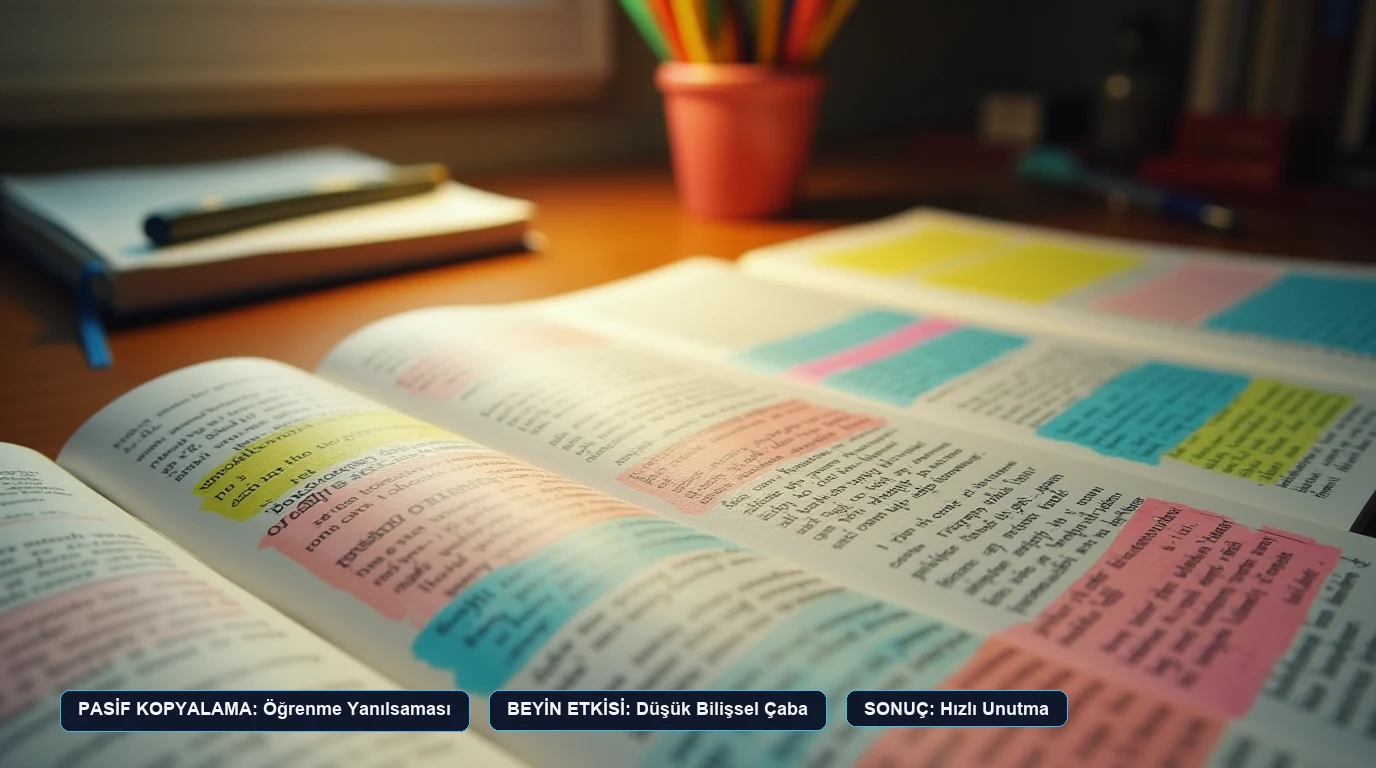
Yet several weeks later, when reopening those notebooks, the notes feel like the journal of a complete stranger. The sentences are technically accurate, but your brain retains zero living connections to the concepts. This breakdown is not caused by laziness; it is the biological consequence of falling into the passive transcription trap, an approach fundamentally opposed to how the brain learns.
The Passive Copying Trap: Why the Brain Lacks Engagement
The human brain relies on sophisticated metabolic energy conservation mechanisms to filter the continuous deluge of sensory data. When you observe a printed sentence and immediately mirror it onto a page, the executive and semantic reasoning networks of the prefrontal cortex are barely recruited. Information enters sensory memory, lingers momentarily in short-term working memory, and dissolves without forging lasting engrams.
In classic trials conducted by researchers at Princeton University and UCLA, students transcribing lecture content verbatim on laptops performed substantially worse on conceptual synthesis and application tests than peers who took longhand notes in their own words (Mueller & Oppenheimer, 2014). Verbatim copying allows the brain to swallow information whole without cognitive digestion.
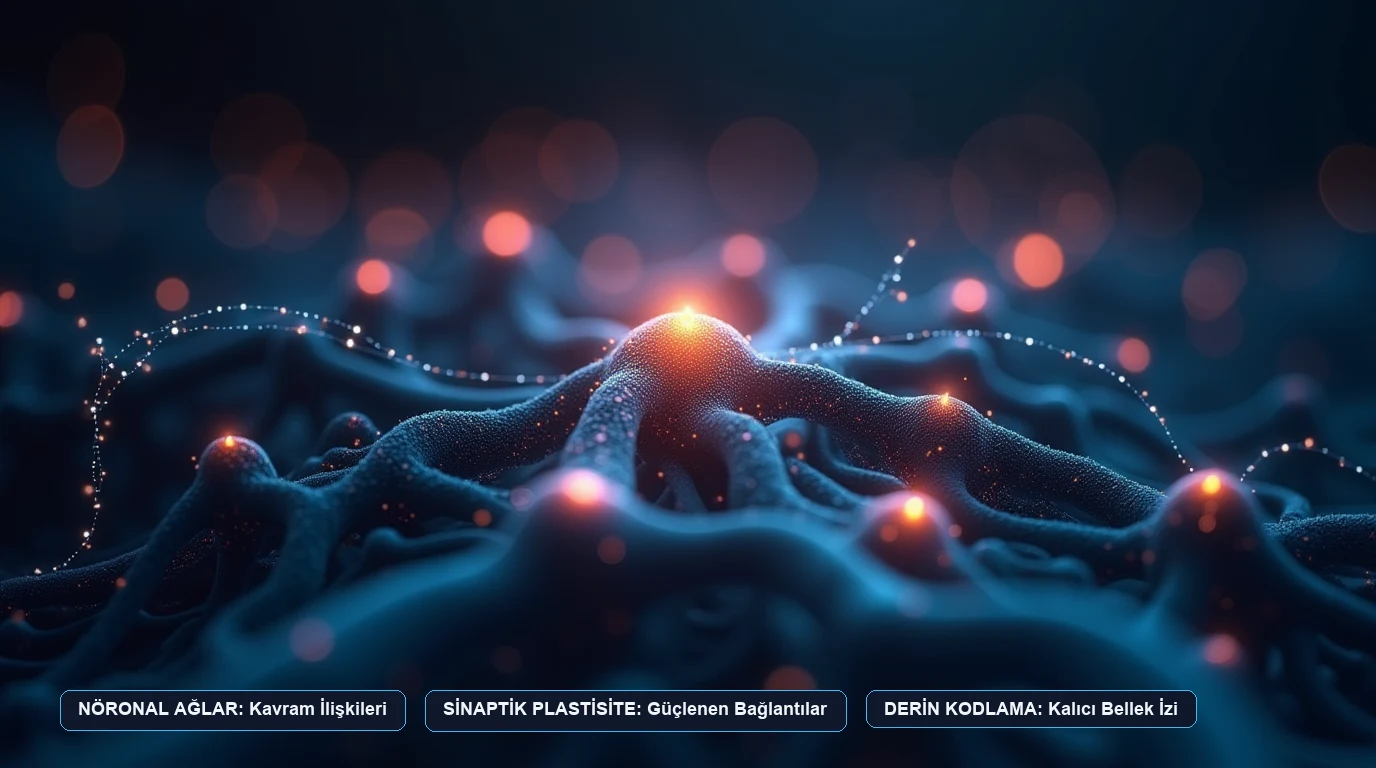
As cognitive memory researchers emphasize, the brain requires deliberate effortful processing to tag incoming data as biologically essential. Just as myofibrils hypertrophy only under mechanical resistance, synaptic junctions between neurons form enduring engrams only when forced to reconstruct and reformulate ideas independently.
Active Note-Taking: 3 Frameworks That Accelerate Synaptic Encoding
To cultivate durable retention, note-taking must transform from a passive recording instrument into a mental refinery. Cognitive research highlights three foundational frameworks with exceptional neurological yield:
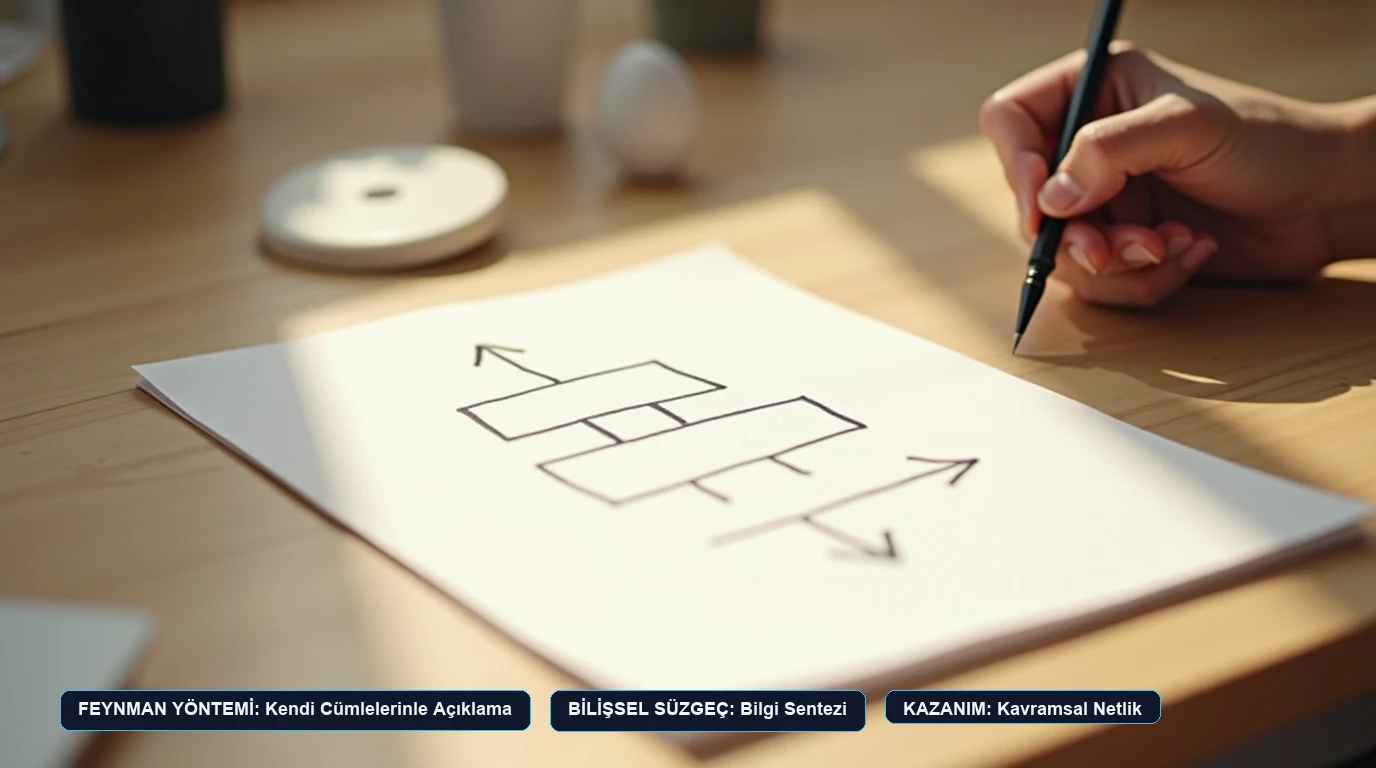
1. The Feynman Synthesis: Radical Simplification in Your Own Words
Named after Nobel laureate physicist Richard Feynman, the rule is uncompromising: Put the reference material away and explain the concept on paper in everyday language, as though teaching a 10-year-old child. If you must hide behind opaque jargon, you have not truly comprehended the underlying mechanism. This process of translation forces disparate fragments of knowledge into a cohesive associative web.
2. The Cornell Layout: Question-Driven Cues
In the Cornell system, the page is divided into three distinct zones: The wide right column holds concise notes taken during study; the narrow left margin holds retrieval cue questions targeting those notes; and the bottom hosts a 2-sentence synthesis. When reviewing, cover the right column and answer the questions on the left, stimulating active recall instead of passive rereading.
3. Conceptual Anchoring: “What Does This Resemble?”
Rather than leaving a new concept isolated on a mental island, anchor it to pre-existing mental schemas. For instance, comparing the selective permeability of a biological cell membrane to an access-controlled turnstile at a corporate entrance allows the hippocampus to integrate the concept into existing neural scaffolding.
Dual Coding & Visual Mapping: Why We Recall Twice as Fast
Formulated by cognitive psychologist Allan Paivio, Dual Coding Theory posits that the human mind processes incoming information through two distinct, independent channels: Verbal and nonverbal/visual. When storing insights solely through written text, you engage only left-hemispheric linguistic networks.
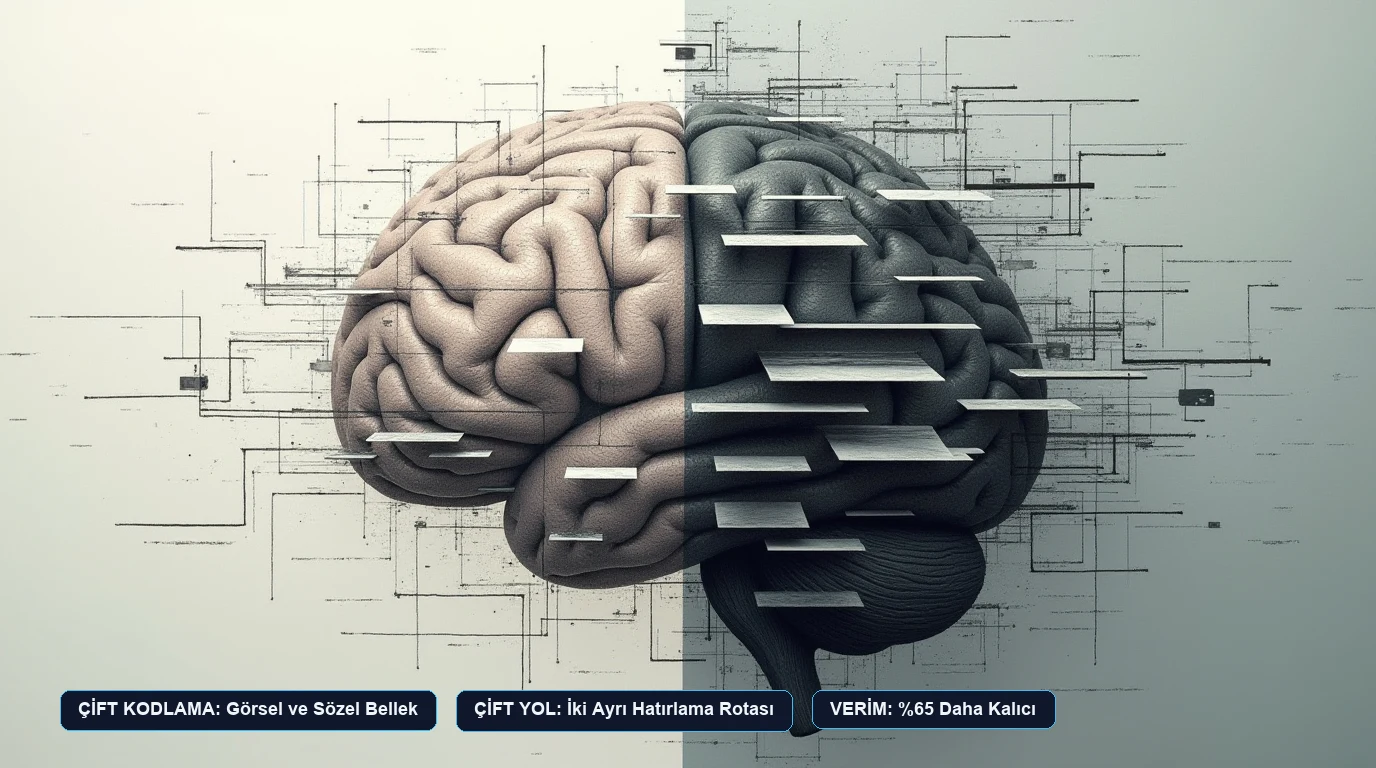
However, when you add a quick relational box, a directional arrow, or a simple hierarchy tree alongside your notes, the visual cortex is recruited simultaneously. Because the information is encoded across dual channels, the brain has two independent retrieval pathways to access the insight later. Controlled trials demonstrate that incorporating dual coding into study notes elevates long-term recall by up to 65%.
Digital Keyboards vs. Longhand Ink: The Electrophysiological Evidence
Faced with the sheer speed of modern laptops and tablets, typing notes appears vastly superior on surface efficiency. However, a rigorous 2024 neuroimaging study using high-density electroencephalography (EEG) at the Norwegian University of Science and Technology (NTNU) established that handwriting stimulates distinct neural synchronization patterns unavailable during keyboard typing (Van der Meer & Van der Weel, 2024).
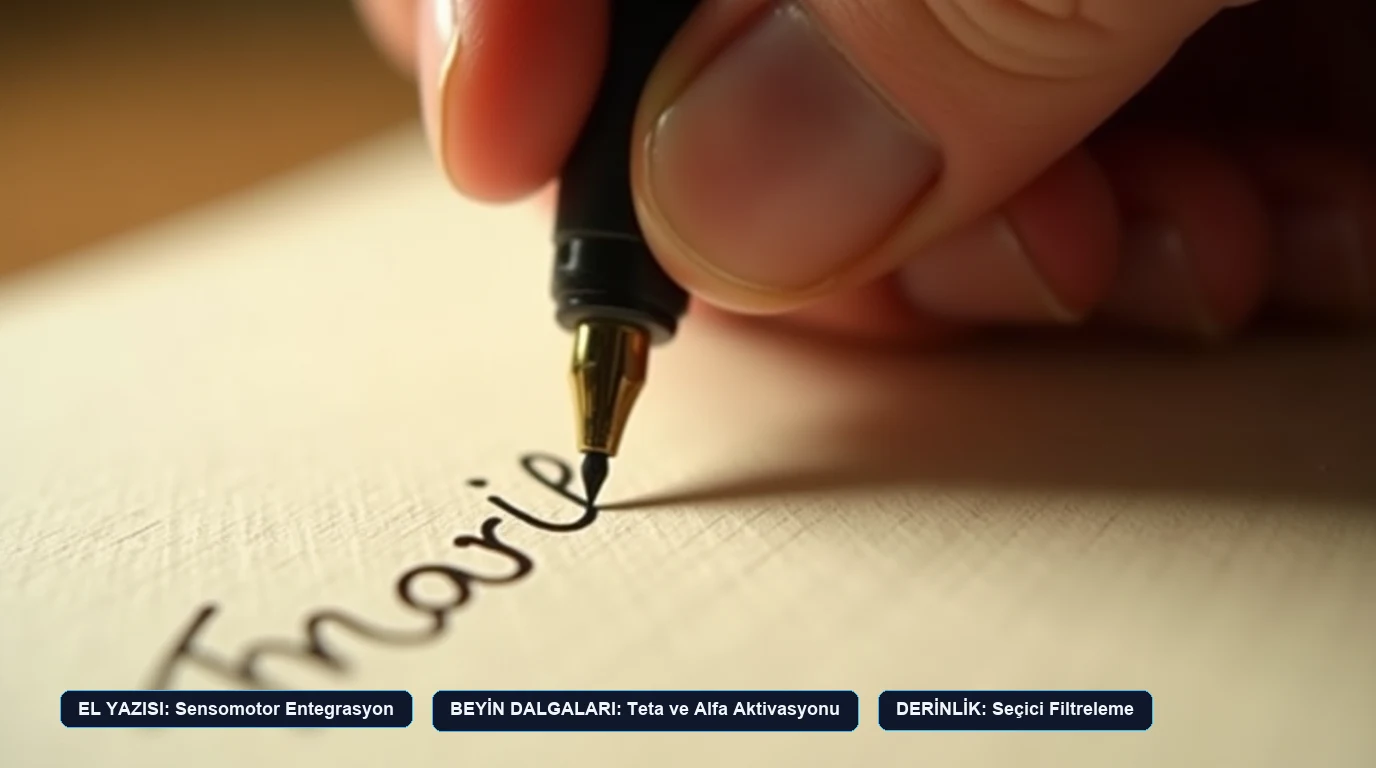
When pressing keys on a keyboard, every character involves identical mechanical motions; striking ‘A’ versus ‘Z’ imparts zero differentiated sensory memory to the fingertips. In contrast, drawing letters with ink requires intricate tactile feedback and continuous motor modulation, activating parietal-temporal-frontal networks.
Crucially, the physical slowness of handwriting is its greatest cognitive feature: Because you cannot transcribe as fast as an instructor speaks, your working memory is forced to summarize in real time, discard superfluous filler, and record only the conceptual core. This mandatory real-time synthesis constitutes the very heart of deep learning.
Daily Hybrid Note-Taking Protocol
How can you translate these neuroscience principles into an efficient daily workflow? Below is an evidence-based hybrid execution protocol:

| Phase | Action Step | Cognitive Mechanism | Recommended Duration |
|---|---|---|---|
| 1. Listening / Reading | Abandon verbatim transcribing; capture only core anchors and causal links. | Working memory overload prevention | Continuous |
| 2. Filtering | Close the text or slides; write a 3-bullet summary strictly in your own words. | Feynman synthesis & prefrontal activation | 3 min at session end |
| 3. Visualizing | Connect bullet points with arrows, relational boxes, or hierarchy branches. | Paivio Dual Coding Theory | 2 minutes |
| 4. Question Formulation | In the margin, write: “What question does this note answer?” | Active recall retrieval anchor (Cornell) | 2 minutes |
| 5. Spaced Retrieval | 24 hours later, cover the notes and answer the margin questions from memory. | Synaptic consolidation & forgetting curve resistance | 5 minutes |
Frequently Asked Questions
Why doesn’t highlighting sentences in books produce lasting memory?
Highlighting triggers a cognitive illusion known as the “fluency heuristic”—the brain feels a premature sense of familiarity (“I understand this now”). However, because highlighting requires zero effortful memory retrieval, highlighted passages are forgotten within days. To retain text, close the book and summarize the sentence mentally instead.
Why is laptop note-taking discouraged in lectures?
Typists quickly match the verbal speed of speakers, lapsing into mindless scribal behavior that bypasses higher-order conceptual processing. Longhand writing naturally slows you down, forcing the brain to evaluate, condense, and prioritize information.
Do I need artistic drawing skills to use dual coding?
Not at all. Dual coding requires no artistic talent. A simple box around a term, a cause-and-effect arrow between two ideas, or a plus/minus symbol is more than enough to engage visual cortical networks.
Can stylus writing on digital tablets substitute for traditional paper?
Yes. Using e-paper devices or digital tablets with textured, matte screen protectors largely preserves the sensorimotor benefits of handwriting. The key biological factor is engaging the fine motor neurons of the hand and forcing self-generated summarization.
Related Cognitive Guides
- Learn how working memory constraints trigger cognitive errors in Why Can’t We See What’s Right in Front of Us? Inattentional Blindness & Human Error.
- Discover how digital delays fragment deep focus in Digital Waiting Latency, Attention Residue, and Habit Neurobiology.
- Explore how exercise promotes adult hippocampal neurogenesis in Can Exercise Really Erase Forgetfulness? Neurogenesis & Memory.
References & Academic Sources
- Mueller, P. A., & Oppenheimer, D. M. (2014). The Pen Is Mightier Than the Keyboard: Advantages of Longhand Over Laptop Note Taking. Psychological Science, 25(6), 1159–1168. DOI: 10.1177/0956797614524581 · PMID: 24760141
- Van der Meer, A. L. H., & Van der Weel, F. R. (2024). Handwriting but not typewriting leads to widespread brain connectivity: A high-density EEG study with implications for learning. Frontiers in Psychology, 14, 1219386. DOI: 10.3389/fpsyg.2023.1219386 · PMID: 38312513
- Dunlosky, J., Rawson, K. A., Marsh, E. J., Nathan, M. J., & Willingham, D. T. (2013). Improving Students’ Learning With Effective Learning Techniques: Promising Directions From Cognitive and Educational Psychology. Psychological Science in the Public Interest, 14(1), 4–58. DOI: 10.1177/1529100612453266
- Paivio, A. (1986). Mental Representations: A Dual Coding Approach. Oxford University Press. ISBN: 978-0195066661.
- Schmidt, P. (2026). Make This Note-Taking Switch If You Want to Learn Faster. Write A Catalyst Cognitive Science Bulletin, Vol. 4, Issue 18.
- Feynman, R. P. (1985). Surely You’re Joking, Mr. Feynman!: Adventures of a Curious Character. W. W. Norton & Company. ISBN: 978-0393316049.
For informational purposes only; consult a physician for medical diagnosis or treatment.