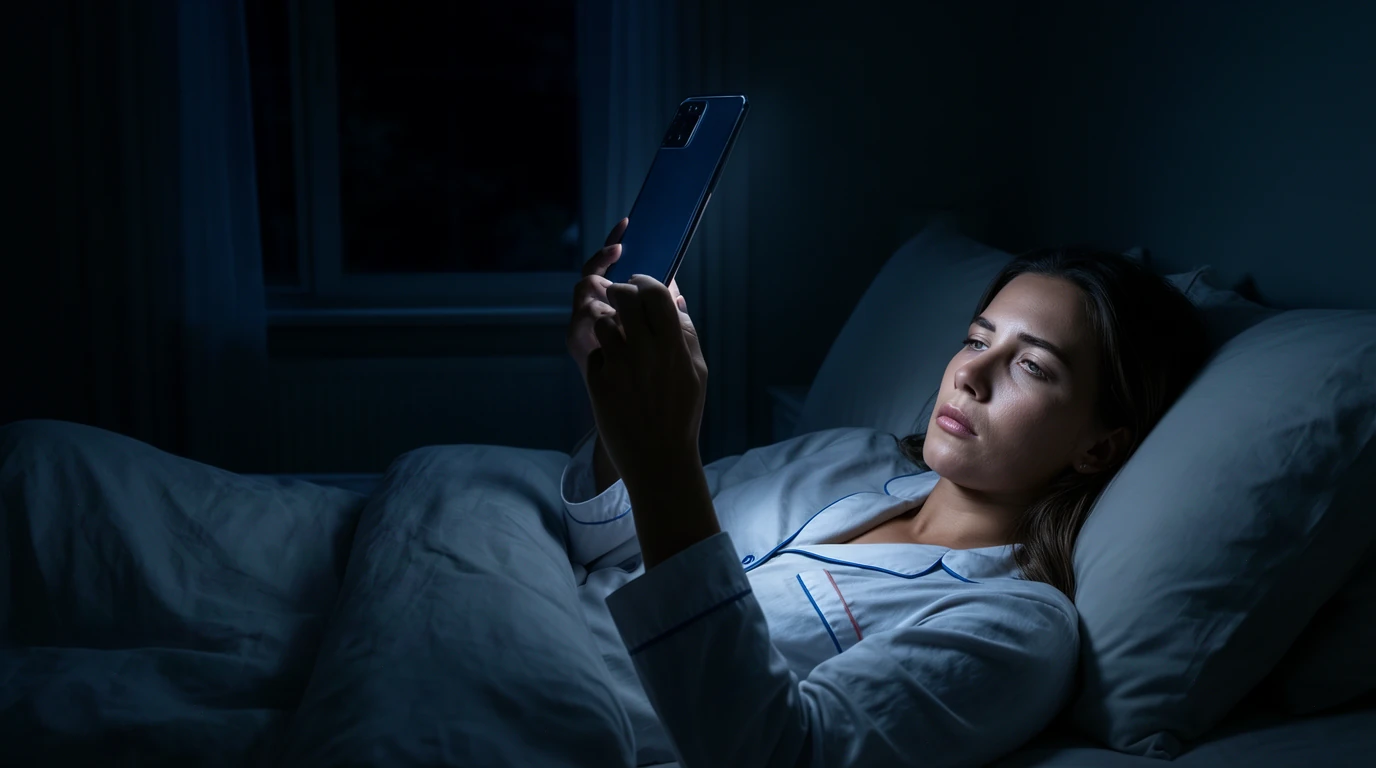
- → Bedtime Procrastination as Autonomy Reclamation: Individuals deprived of daytime agency consciously delay sleep as an unconscious psychological attempt to reclaim sovereign personal hours (Cimino and Cerniglia, 2026).
- → Prefrontal Executive Depletion: Having made hundreds of decisions throughout the day, the prefrontal cortex suffers ego depletion, leaving it defenseless against variable dopamine rewards from short-form feeds (Zhang et al., 2026).
- → Body in Bed, Mind in Tomorrow: Physical recumbency accompanied by anticipatory worry locks the autonomic nervous system into sympathetic vigilance, blunting vagal tone (Granova et al., 2026).
- → Self-Compassion and Somatic Offloading: Replacing self-blame with a bedside paper brain dump and gentle fascial release activates the parasympathetic brake, significantly shortening sleep onset latency (Dong et al., 2026).
Why Do We Scroll in Bed and Steal Hours from Sleep? The Neuroscience of Revenge Bedtime Procrastination and Parasympathetic Recovery
⚖️ Medical Disclaimer: This content is for informational purposes only and does not replace a physician’s examination, clinical diagnosis, or personalized medical guidance.
In Brief
- Retaliating against daylight demands: After spending daylight hours subordinate to external schedules, the tired psyche deliberately delays sleep in a desperate attempt to reclaim personal autonomy.
- Depleted prefrontal reserves and dopamine traps: Late at night, exhausted executive control networks struggle to resist the variable dopamine schedules engineered into short-form video algorithms.
- Physical bed rest vs. mental anticipation: Unresolved anticipatory stress regarding tomorrow triggers sympathetic arousal, elevating muscle tone and preventing vagal nerve engagement.
- Offloading, somatic ease, and self-compassion: Translating tomorrow’s anxieties onto paper, performing micro-fascial neck releases, and adopting a self-compassionate attitude restore parasympathetic tone.
Sound Familiar? “Just Five More Minutes Before Sleep”
There are merely six hours remaining before your morning alarm rings, and your body aches with physical exhaustion. As you slip beneath the covers, you offer yourself a well-intentioned promise: “I’ll just check a few notifications for five minutes, and then immediately sleep.”
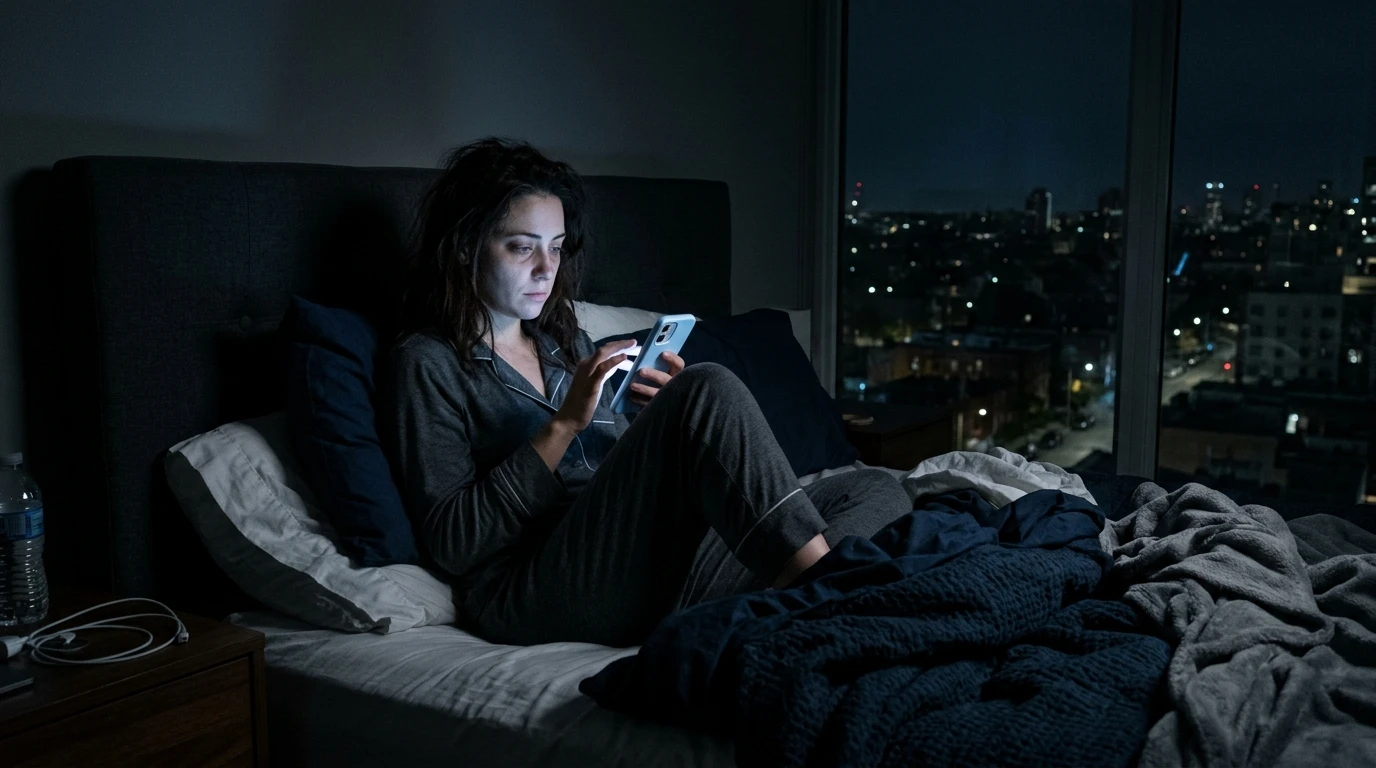
Minutes dissolve unnoticed as your thumb flicks across the display. Short-form clips, messaging pings, and algorithmic curiosity hooks dissolve your perception of time. When you finally glance at the clock, an entire hour has vanished, leaving you enveloped in remorse and frustration [2].
This experience is rarely a manifestation of simple moral failure or laziness. Documented scientifically as revenge bedtime procrastination, this behavior represents an unconscious compensatory response by individuals seeking to reclaim stolen personal sovereignty [2].
Revenge Bedtime Procrastination: Why We Sabotage Our Own Sleep
In contemporary industrial environments, nearly every waking hour is dominated by workplace deadlines, employer expectations, and household logistics. Human neurobiology, however, possesses a foundational biological drive for autonomy and self-directed agency [2].
When daylight hours leave zero space for discretionary activities, late-night silence is perceived as a sanctuary of self-determination. The subconscious adopts a clear defensive posture: “The day belonged to others; these midnight hours belong exclusively to me, and I refuse to surrender them to unconscious sleep” [2].

Unfortunately, this legitimate search for autonomy collides with the behavioral capture engineering of modern smartphones. Having executed hundreds of taxing decisions since morning, the prefrontal cortex experiences severe ego depletion by midnight [4].
Algorithmic feeds present an intermittent stream of novelty, triggering micro-bursts of dopamine within the nucleus accumbens. While higher cognitive centers attempt to signal that sleep is urgent, the dopamine-driven impulse network overrides executive inhibition, anchoring the user to the device [4].
Body in Bed, Mind in Tomorrow: Sympathetic Vigilance and Fascial Tension
Even when an individual successfully sets the phone aside, a second neurological hurdle frequently arises: cognitive hyperarousal. While the physical body rests motionless on the mattress, the mind races forward into tomorrow’s meetings, unresolved emails, and pending deadlines [3].
Whenever the central nervous system detects unmanaged prospective uncertainty, it treats the ambiguity as an evolutionary threat. The sympathetic nervous system engages silently, prompting adrenal glands to release a low-grade surge of cortisol [3].
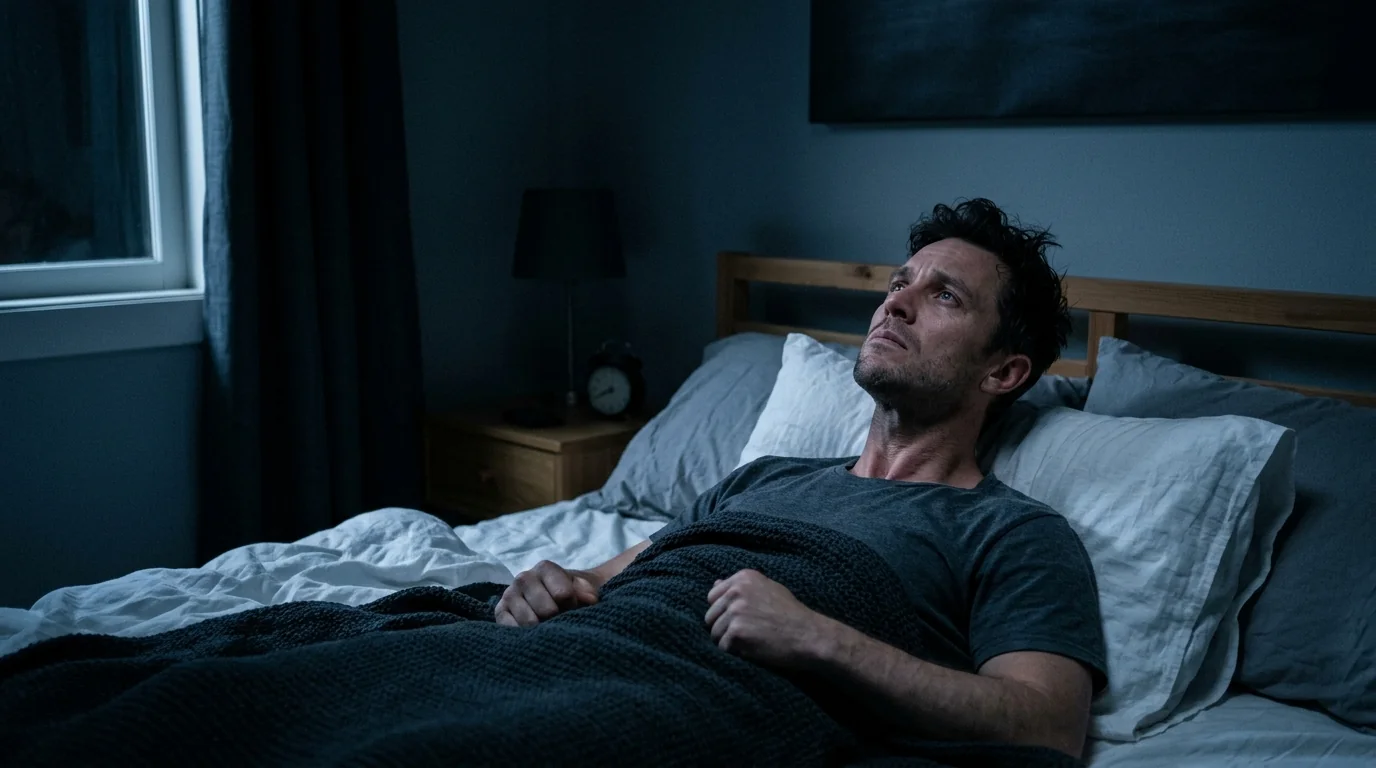
This sympathetic activation translates into palpable physical tension: the jaw clenches, shoulders elevate toward the ears, and the cervical fascia (the connective tissue envelope around neck musculature) stiffens. While the body registers physical vigilance, the brain steadfastly refuses to unlock slow-wave sleep [3].
Under these circumstances, the smartphone paradoxically re-emerges as a maladaptive anesthetic. Unable to quiet their racing internal monologue, individuals pick up the phone once more to numb their cognitive discomfort, reinforcing a self-perpetuating cycle of sleep debt [3, 4].
Fascial Ease and the Vagus Brake: The Body’s Biological Off-Switch
Falling asleep requires the brainstem to conclude that the immediate environment is secure and that physiological vigilance can be safely relinquished. The primary neurological channel executing this transition is the tenth cranial nerve: the vagus nerve [1].
Acting as a physiological brake, vagal efferent fibers slow the sinoatrial node and reduce systemic vascular tone. However, for this vagal brake to function effectively, peripheral neuromuscular and fascial tension around the neck, thorax, and diaphragm must relax [1].

A two-minute sequence of bedside micro-stretches—unclenching the masseter, dropping the shoulders, and opening the anterior chest—transmits mechanoreceptive feedback to the brain indicating safety. This somatic signal disarms subcortical alarm centers far more rapidly than mental willpower alone [1].
Pairing these gentle movements with a physiological sigh (a double nasal inhalation followed by a prolonged, unforced oral exhalation) re-inflates collapsed pulmonary alveoli, improves heart rate variability (HRV), and engages sleep onset pathways [1].
Mental Offloading and Self-Compassion: Dismantling the Guilt Spiral
Individuals struggling with bedtime procrastination frequently subject themselves to harsh internal criticism, labeling their behavior as a chronic character defect. Contemporary clinical studies reveal that self-criticism elevates nighttime cortisol, further delaying restorative sleep [1].
A three-wave longitudinal study published in 2026 demonstrated that cultivating self-compassion mitigates negative pre-sleep affect, substantially curbing bedtime procrastination and enhancing overall sleep quality [1]. Acknowledging personal exhaustion without judgment diffuses the psychological friction that fuels avoidance.

The most accessible tool for this transition is an analog bedside notebook. Writing tomorrow’s top three commitments along with persistent worries (brain dump) reassures the working memory that critical information is preserved, allowing cognitive processing to power down [1, 3].
Evening Protocol: The 4-Step Digital Twilight Transition
Overcoming bedtime procrastination cannot rely on passive intention; nature abhors a behavioral vacuum. Digital stimulation must be replaced with a structured somatic ritual.

Implement the following four-phase protocol thirty minutes prior to rest:
- Exile the Phone to the Hallway: Place your mobile device on a charging station outside the bedroom or at a physical distance impossible to reach from bed. Rely on a basic analog alarm clock for wake times.
- Bedside Cognitive Offload (3 Minutes): In an analog notebook, record tomorrow’s three most critical action items alongside any recurring worries. Physically transfer mental RAM onto paper.
- Somatic Fascial Release (2 Minutes): Sitting comfortably on the edge of the bed, roll your shoulders backward three times, drop your tongue from the roof of your mouth, and gently mobilize the cervical spine.
- Physiological Sigh Sequence (5 Cycles): Inhale deeply through the nose, add a sharp supplemental nasal sip at the top of lung volume, and exhale smoothly and audibly through parted lips.
Evidence Quality and Strategy Comparison
The scientific evidence evaluating behavioral and somatic interventions against bedtime procrastination is detailed below:
| Protocol / Strategy | Neurological Mechanism | Implementation Ease | Evidence Level |
|---|---|---|---|
| Charging phone outside bedroom | Complete environmental removal of dopamine triggers | Moderate | 🟢 Strong |
| Bedside cognitive offload (Brain Dump) | Alleviating working memory load and lowering nocturnal cortisol | Very Easy | 🟢 Strong |
| Somatic fascial ease and deep sighing | Vagal afferent stimulation reducing heart rate and muscle tonus | Easy | 🟢 Strong |
| Self-compassion reframing | Dampening sympathetic arousal induced by self-blame | Easy | 🟢 Strong |
| Relying solely on willpower in bed | Rapid failure caused by depleted prefrontal executive reserves | Very Difficult | 🔴 Insufficient |
💡 Understanding Evidence Levels:
- 🟢 Strong: Confirmed by multiple independent human clinical trials, randomized controlled investigations, and comprehensive meta-analyses.
- 🟡 Emerging: Supported by prospective observational cohorts and preliminary clinical findings requiring further mechanistic replication.
- 🔴 Insufficient: Premised on subjective belief or unsupported claims lacking clinical verification, particularly when executive willpower is exhausted.
Everyday Functional Benefits
Resolving revenge bedtime procrastination extends far beyond waking up less groggy; it recalibrates daytime executive performance, emotional resilience, and metabolic balance [1, 2].
The fifteen minutes of analog tranquility claimed before sleep allow the glymphatic system to efficiently clear neurotoxic metabolites and facilitate memory consolidation without algorithmic disruption [1].
Transforming your bedroom from a digital entertainment arena into a restorative sanctuary replaces chronic morning lethargy with sustained cognitive stamina [3].
Clinical Safety and Precautions
The behavioral and somatic techniques outlined in this guide are inherently safe for healthy adults. However, individuals experiencing chronic clinical insomnia, major depressive disorder, or generalized anxiety should recognize that bedtime avoidance may reflect underlying psychiatric distress [3].
In such cases, habit adjustment should complement—not replace—professional medical evaluation and Cognitive Behavioral Therapy for Insomnia (CBT-I). Furthermore, individuals with cervical disc pathology or structural spine conditions should avoid aggressive neck stretches without consulting their orthopedic specialist.
Scientific Basis
- Dong et al. (2026): Three-wave longitudinal investigation documenting that self-compassion attenuates negative affect pathways, directly diminishing bedtime procrastination and enhancing sleep quality [1].
- Cimino and Cerniglia (2026): Groundbreaking clinical overview examining the psychological architecture of parental revenge bedtime procrastination and the compensatory dynamics of nighttime screen use [2].
- Granova et al. (2026): Multi-center study investigating chronotype, emotional regulation capacity, and sleep hygiene practices as prospective determinants of bedtime delay among adolescents and young adults [3].
- Zhang et al. (2026): Empirical study exploring how late-night short-form video consumption (e.g., Reels, TikTok) alters dopamine signaling, exacerbates working memory fatigue, and inflates sleep latency [4].
- Kroese et al. (Seminal Foundational Literature): Landmark paper conceptualizing bedtime procrastination as an executive self-regulation shortfall, linking prefrontal ego depletion directly to sleep insufficiency [5].
References
- [1] Dong F, Xie S, Yan Z. Self-compassion predicts reduced bedtime procrastination through affect pathway: a three-wave longitudinal study. — BMC Psychol. (2026). PMID: 42947169 · DOI: 10.1186/s40359-026-05267-x · PubMed
- [2] Cimino S, Cerniglia L. Parental Revenge Bedtime Procrastination and Parent-Child Feeding Interactions in Early Childhood: A Theory-Driven Perspective on an Unstudied Pathway. — Clocks Sleep. (2026). PMID: 42924739 · DOI: 10.3390/clockssleep8040063 · PubMed
- [3] Granova E, Zatkova M, Sollár T. Chronotype and Emotion-Regulation as Determinants of Bedtime Procrastination in Adolescents: The Mediating Role of Sleep Hygiene Practices. — Nat Sci Sleep. (2026). PMID: 42921185 · DOI: 10.2147/NSS.S544795 · PubMed
- [4] Zhang L, Gelin H, Jiang X. How short-video usage influences college students’ daily lives: empirical evidence from sleep, self-perception, daily life conditions, and emotional state. — Front Psychol. (2026). PMID: 42890929 · DOI: 10.3389/fpsyg.2026.1855722 · PubMed
- [5] Kroese FM, De Ridder DT, Evers C, Adriaanse MA. Bedtime procrastination: introducing a new area of procrastination. — Front Psychol. (2014). PMID: 24994989 · DOI: 10.3389/fpsyg.2014.00611 · PubMed
For informational purposes only; consult a physician for medical diagnosis or treatment.