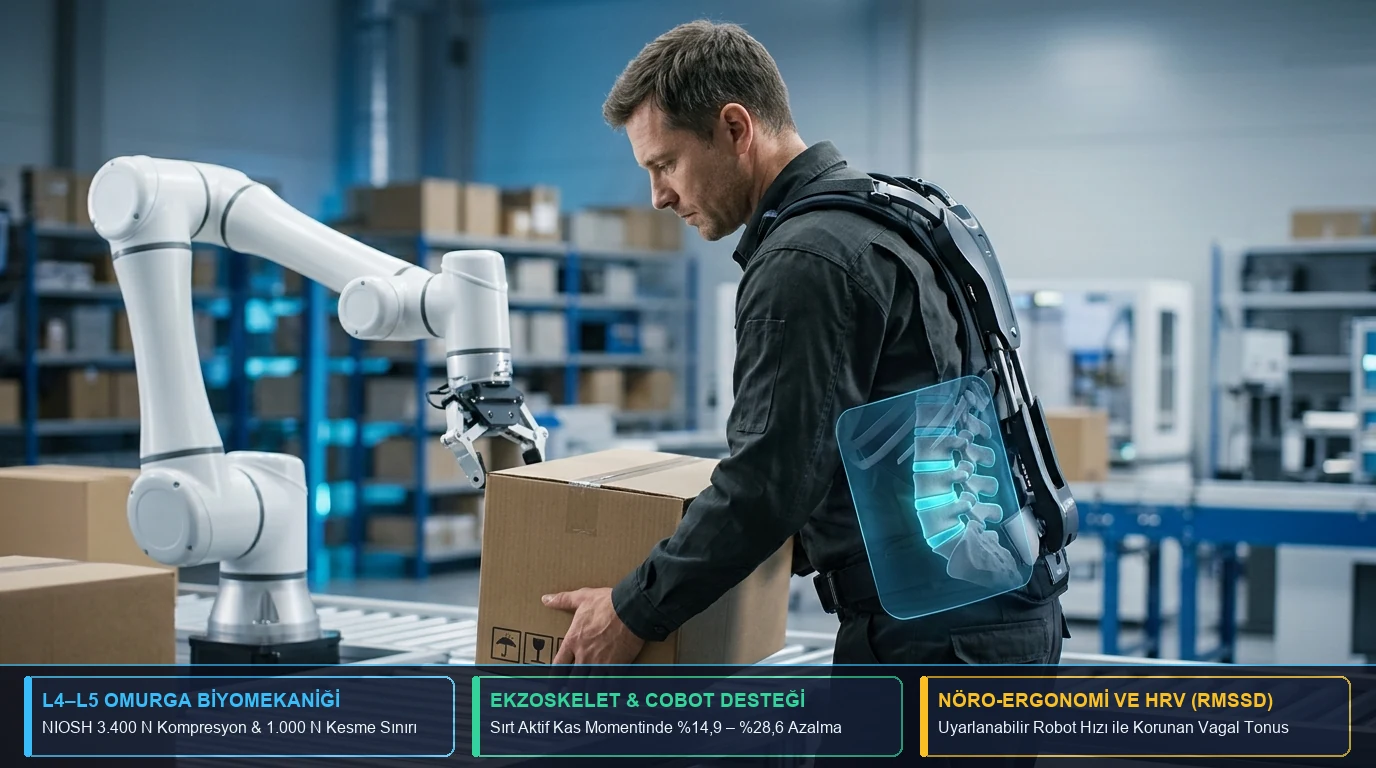
- → Reaching multiplies spinal load: Lifting a 15–20 kg box with outstretched arms exerts approximately 346 kg of compressive force on your lower lumbar discs due to the lever effect (Ghezelbash et al., 2020).
- → Twisting shears spinal discs: Rotating your torso under load without pivoting your feet elevates intervertebral shear forces beyond the safety threshold (Skals et al., 2021).
- → Wearable back supports relieve muscle strain: Lumbar exoskeletons reduce back muscle activation during lifting and forward flexion by 15% to 28.6% (Eskandari et al., 2025; Hu et al., 2026).
- → Chasing machine pace induces cardiovascular stress: Rushing to match a fixed-speed robot elevates heart rate and drops HRV, whereas human-adaptive pacing maintains productivity while preserving autonomic balance (Javernik et al., 2026).
⚠️ Clinical Disclaimer: This article provides general educational information grounded in peer-reviewed scientific literature and does not replace medical diagnosis or therapy. If you experience disc herniation, radiating leg pain (sciatica), numbness, or unremitting back pain, consult a neurosurgeon or physical medicine and rehabilitation specialist.
Quick Summary
- Lifting a 15 kg parcel from the floor with outstretched arms exerts more than 340 kg of compressive load on your lumbar vertebrae [1, 2].
- Twisting your torso while lifting is the single most damaging movement pattern for intervertebral discs [1, 2].
- Wearable back-assist exoskeletons and collaborative robotic arms significantly lower back muscle strain during repetitive material handling tasks [3, 4, 5].
- When machine workflows and robotic pacing are tailored to the human worker’s natural tempo, overall throughput remains high while cardiovascular stress markers drop [6, 7].
Does This Sound Familiar?
You bend down to pick up a water jug, heave a suitcase into the trunk, or unload a package from a pallet at a warehouse. You tell yourself: “It’s only 15 kilos; I’ll grab it quickly.”
Without bending your knees, you round your spine forward, seize the box with arms outstretched, and twist your upper body to place it onto a nearby counter. Right at that split second, you feel a sharp pinch or debilitating spasm in your lower back.
Why does an object weighing only 15 kilograms on a scale generate hundreds of kilograms of crushing pressure inside your spine? Below, we examine the mechanical principles of the human lumbar spine, common lifting pitfalls, and how emerging assistive technologies protect the musculoskeletal system.

1. Why Does a 15-kg Box Feel Like 350 kg on the Spine?
The human spine does not pull weight straight upward like a vertical crane; it operates like a first-class lever, analogous to a seesaw. The pelvis and the lowest lumbar vertebrae (L4–L5 and L5–S1, the two most mobile joints in the lower back) act as the central pivot or fulcrum.
The Short-Arm vs. Long-Arm Lever Problem
The extensor muscles (erector spinae) stabilizing our spine run along the posterior side of the vertebral column, positioned merely 5 to 6 cm from the pivot point. In contrast, the box in your hands and your forward-flexed upper torso sit 40 to 60 cm in front of that fulcrum [1, 2].
What happens when one side of a lever is 8 to 10 times longer than the other? To counterbalance a 15-kg load on the long lever arm, the back muscles on the short arm must contract with 8 to 10 times that force. This immense muscular tension compresses the lumbar vertebrae together, subjecting the intervertebral discs to hundreds of kilograms of vertical force [1, 2].
What Are the Biomechanical Safety Thresholds?
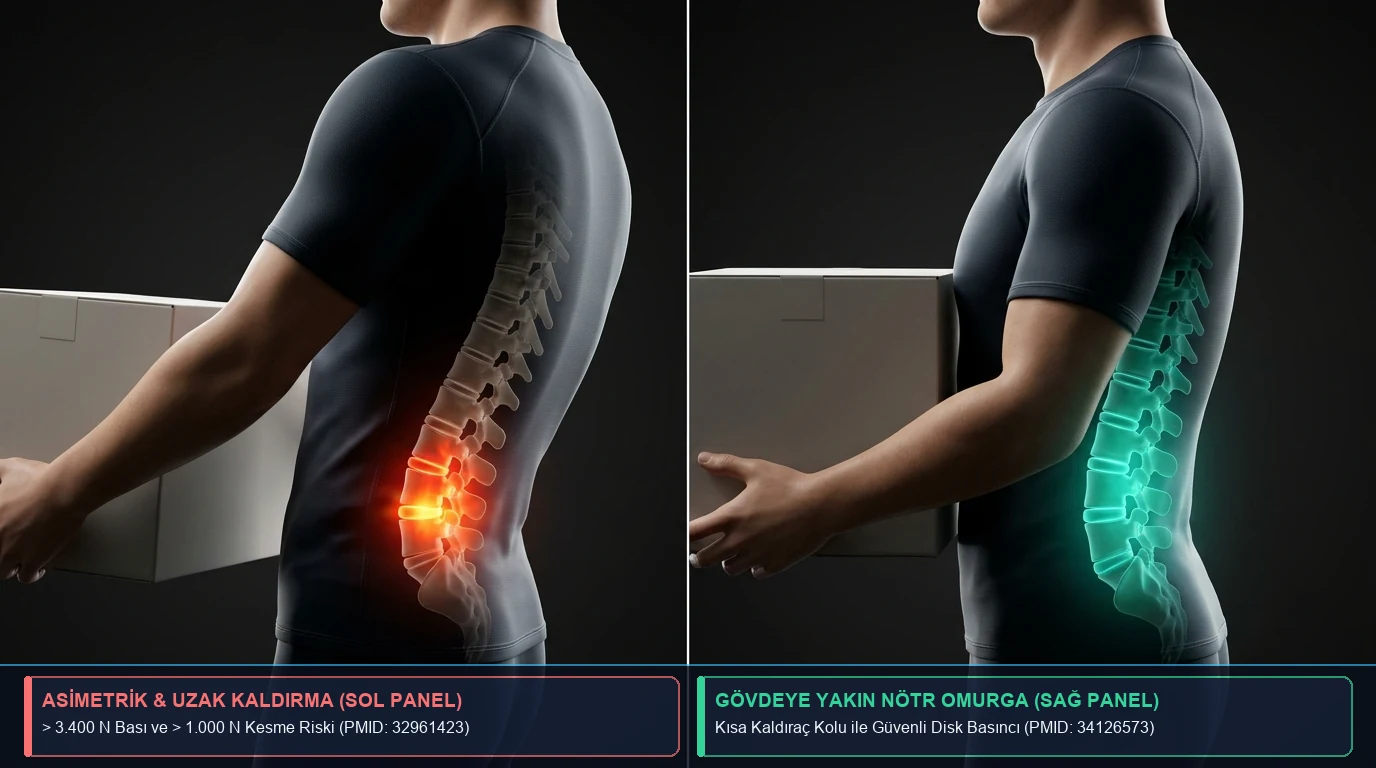
Biomechanical researcher Farshid Ghezelbash and colleagues benchmarked five spinal computational models against in vivo intradiscal pressure measurements [1]. Under occupational safety standards (e.g., NIOSH), two critical thresholds define spinal load limits:
- Vertical Compressive Limit (3,400 N / ~346 kg): When axial compressive force exceeds this limit, microtrauma and endplate microfractures begin to accumulate in the vertebral bodies [1].
- Shear Limit (1,000 N / ~100 kg): This represents the force sliding one vertebra across another anteriorly, posteriorly, or laterally [1]. Discs are well adapted to withstand axial compression, but highly vulnerable to shear stress.
The Real Hazard: Axial Rotation Under Load
In Denmark, researcher Sebastian Skals and colleagues meticulously quantified 1,832 distinct lifting trials across 22 healthy participants [2]. The findings were clear:
- Distance doubles the load: Holding an identical box 50 cm away from the chest rather than 25 cm nearly doubles lower back compression [2].
- Torso twisting induces disc shearing: Twisting the trunk 30° to 60° without repositioning the feet is the primary driver of dangerous intervertebral shear forces [2].
- Lifting height shifts the vulnerable joint: Picking up loads from floor level strains the knees and lumbar discs, whereas stowing items onto overhead shelves shifts the highest mechanical strain to the glenohumeral shoulder joints [2].
| Lifting Technique | Biomechanical Consequence | Risk Profile |
|---|---|---|
| Box held tight to chest, facing straight | Compressive and shear forces remain low. | 🟢 Safe [1, 2] |
| Reaching forward with extended arms | Long lever arm exceeds compressive safety threshold. | 🟠 High Risk [1, 2] |
| Twisting the torso while lifting heavy loads | Discs undergo rapid shear stress; annular tear risk spikes. | 🔴 Severe Risk [1, 2] |
| Overhead shelf placement above shoulders | Lumbar torque decreases, but glenohumeral stress spikes. | 🟠 Shoulder Strain [2] |
2. Do Wearable Back Exoskeletons and Collaborative Robots Truly Work?
Practicing proper lifting mechanics for a single parcel at home is straightforward. But what about a logistics or assembly-line worker who bends hundreds of times each shift? As muscular fatigue sets in, even conscientious individuals inadvertently round their backs.
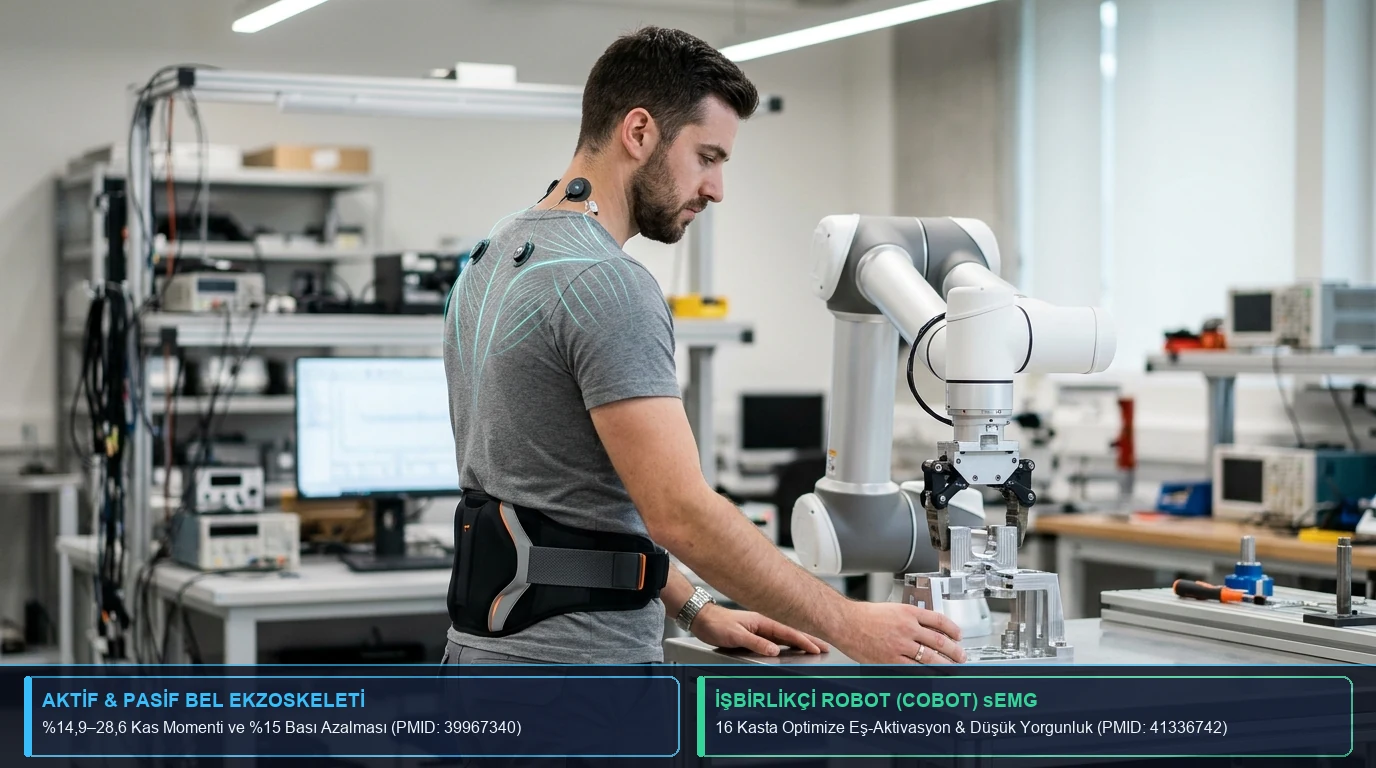
This is where two modern interventions come into play: wearable back-support exoskeletons donned like harnesses, and collaborative robotic arms (cobots) operating in tandem with humans [3, 4, 5].
Acting Like an Invisible Kinetic Spring
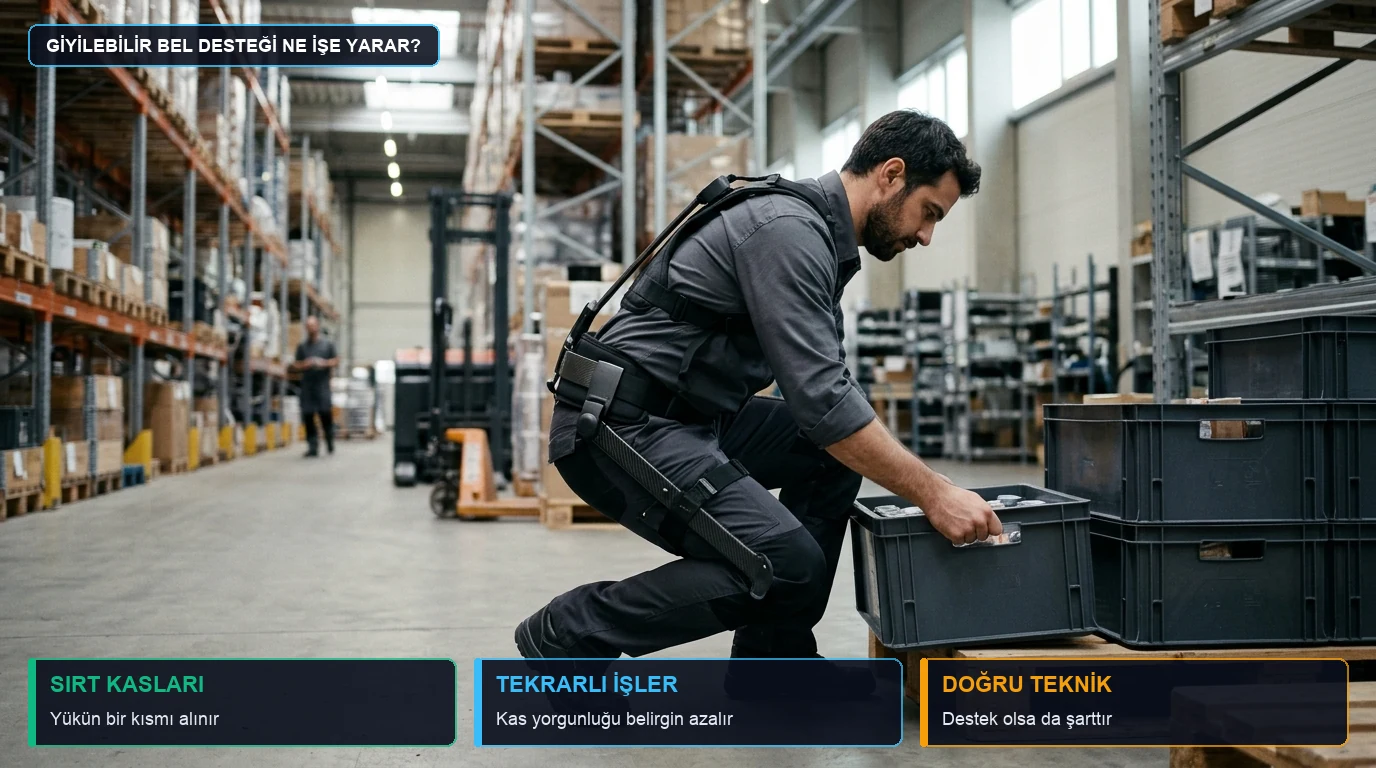
Wearable back exoskeletons tension flexible bands or elastic gas springs between the hips and chest as the user flexes forward, providing assistive torque during the extension phase:
- Passive (Spring-Based) Exoskeletons: A 2025 investigation by Amir Hossein Eskandari and colleagues demonstrated that passive back devices decrease peak compressive and shear forces on lumbar discs by approximately 15% during deep flexion tasks [3].
- Active (Powered) Exoskeletons: In a 2026 trial by F. Hu and co-workers, powered exoskeletons worn during 15-kg lifts reduced back muscle electrical activity by 14.9% to 28.6% [4]. Mean compressive load on the lowest lumbar disc was reduced by 5.5% to 9.3% [4].
Offloading Manual Labor to Collaborative Robotic Arms
When payloads become excessive or repetitive cycles stretch over hours, collaborative robotic arms (cobots) share physical tasks directly with humans. Elena Maria Fiorino and colleagues analyzed 16 arm and torso muscle groups using surface electromyography (sEMG) during cooperative lifting [5].
The result: When the cobot absorbed the bulk of the gravitational payload, human shoulder and lumbar muscles ceased antagonistic co-activation, shifting to a far more energy-efficient and biomechanically balanced activation pattern [5].
3. Why Does Rushing to Match Machine Speed Exhaust the Heart?
Physical muscle fatigue represents only half of the ergonomic equation. In industrial settings where robots lift heavy items, if those machines operate at a rigid, excessively fast tempo, workers experience intense cognitive urgency to “keep up with the robot” [6, 7].
Fixed-Speed vs. Adaptive Robot Collaboration Trials
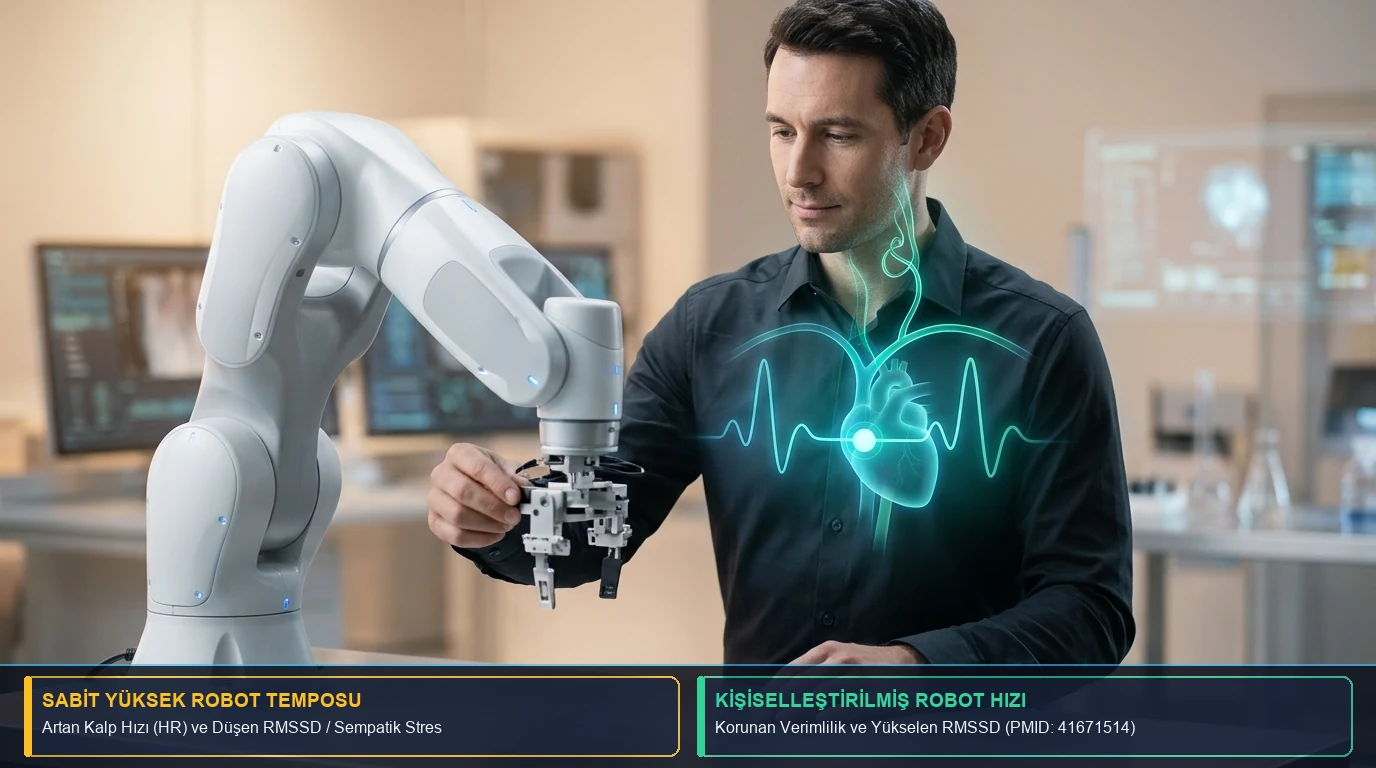
In a 2026 study by Aljaž Javernik and colleagues, human participants engaged in collaborative assembly tasks alongside robotic arms while their cardiovascular markers were tracked [6]:
- Trial 1 (Rigid High Speed): The robot ran at a rapid, constant tempo. Although throughput increased slightly, participants’ heart rates spiked. More critically, heart rate variability (HRV / RMSSD)—the millisecond fluctuations between consecutive heartbeats reflecting parasympathetic tone—dropped precipitously [6]. Even without heavy physical lifting, the nervous system plunged into sympathetic “fight-or-flight” strain.
- Trial 2 (Human-Adaptive Pace): The robot adjusted its cycle speed in real time based on the human operator’s current cadence. The outcome was striking: Overall operational throughput remained virtually identical, yet workers’ heart rates stabilized and autonomic equilibrium was maintained [6].
As emphasized in Sarah Hopko and colleagues’ comprehensive review, authentic ergonomic design in human-robot collaboration must protect not only the spine, but also mental well-being, cognitive load, and cardiovascular health [7].
4. Practical Protocol: 4 Steps to Protect Your Spine and Autonomic Nervous System
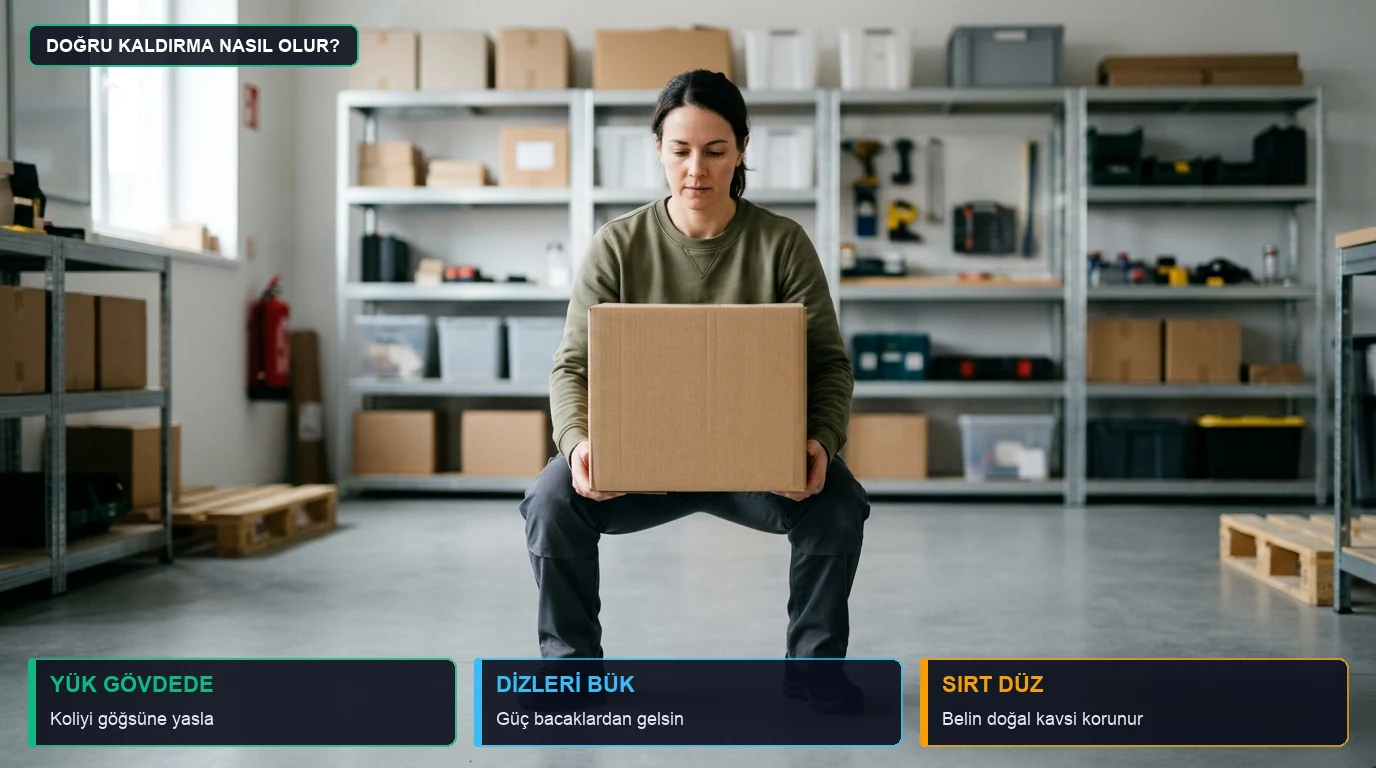
- 1. Hug the load against your chest: Pull the box or container tightly toward your center of gravity before lifting; never lift loads with arms outstretched [1, 2].
- 2. Pivot your feet instead of twisting your waist: When depositing items to the side, avoid twisting your lumbar spine; take small steps to rotate your entire body toward the target [2].
- 3. Utilize mechanical aids for repetitive handling: If you move loads over 15 kg dozens of times daily, use passive/active exoskeletons, hand carts, or scissor lifts [3, 4, 5].
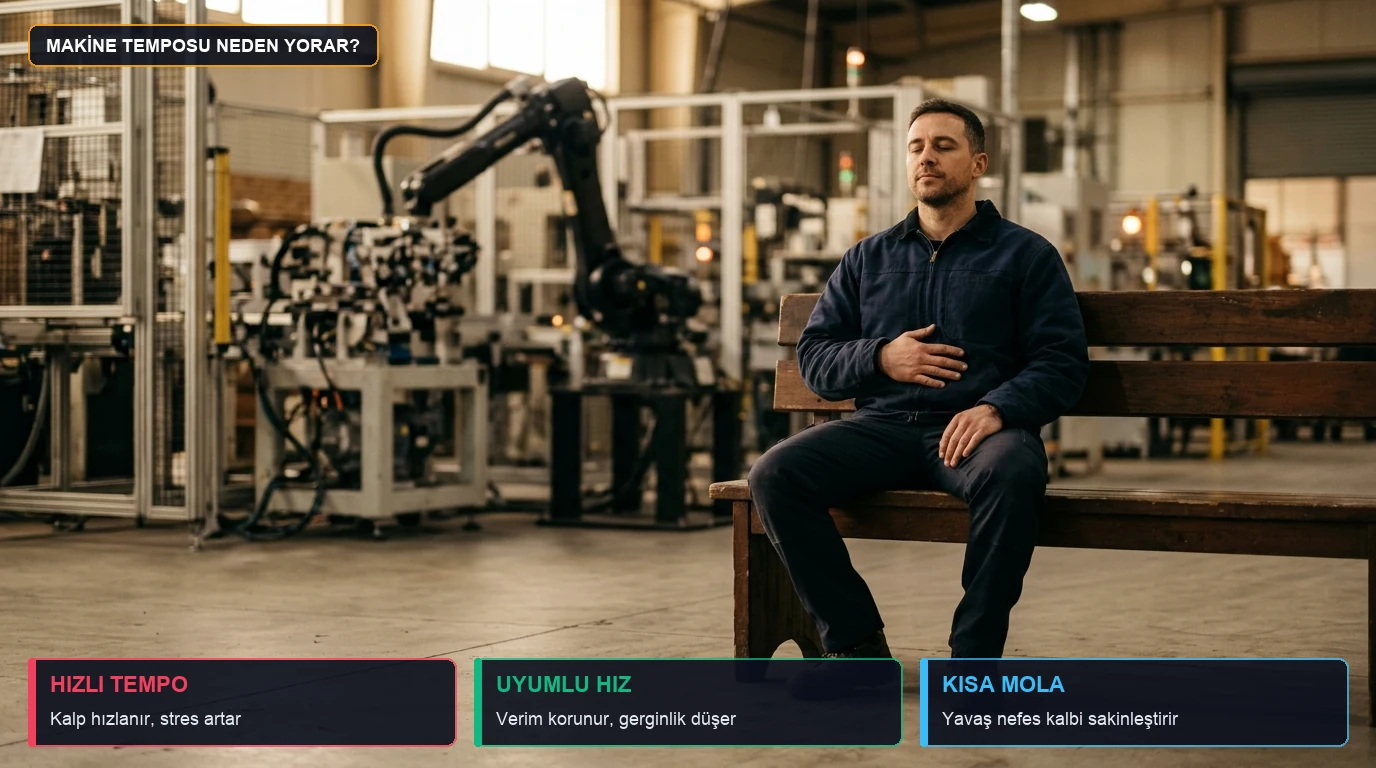
- 4. Practice 3-minute diaphragmatic breathing during breaks: Take a short respite every 90 minutes; practice slow abdominal breathing to downregulate sympathetic arousal and restore HRV [6, 7].
The simplest and most potent rule is the first: Pull the load into your chest. It takes two seconds, but cutting the lever arm in half instantly relieves hundreds of kilograms of compressive force from your spine [2].
Evidence Quality Appraisal
| Finding | Evidence Level |
|---|---|
| Reaching outward and twisting the trunk multiplies compressive and shear forces on lower lumbar discs | 🟢 Strong |
| Wearable back exoskeletons reduce lumbar muscular demand by 15% to 28.6% during forward bending | 🟢 Strong |
| Collaborative robotic arms rebalance muscular activation patterns across the shoulders and torso | 🟢 Strong |
| Human-adaptive robotic pacing maintains throughput while curbing cardiovascular stress markers | 🟡 Emerging |
💡 Understanding Evidence Levels:
- 🟢 Strong: Confirmed across multiple independent human trials, biomechanical modeling validations, and clinical consensus.
- 🟡 Emerging: Backed by smaller cohort experiments, controlled pilot trials, or innovative preliminary studies.
- 🔴 Insufficient: Lacks robust human evidence, conflicting findings, or limited to animal/computational prototypes.
Frequently Asked Questions
What is the safe lifting threshold for lumbar discs?
Under international occupational biomechanical guidelines, the vertical compressive threshold where microstructural wear accelerates is 3,400 N (~346 kg), and the intervertebral shear threshold is 1,000 N (~100 kg) [1]. Lifting a modest 15–20 kg box with outstretched arms can easily breach these limits due to mechanical leverage [1, 2].
Why is twisting while lifting significantly more harmful than lifting straight ahead?
Twisting the torso under load dramatically elevates anterior-posterior and lateral shear forces across the intervertebral joints [2]. While spinal discs are engineered to bear high axial compression, their peripheral annular fibers tear far more readily under rotational shear stress [1, 2].
Do wearable back exoskeletons truly reduce lumbar injury risks?
Yes, especially in repetitive bending and lifting tasks, reducing lumbar muscle workload by 15% to 28.6% and disc compression by 5.5% to 15% [3, 4]. However, exoskeletons cannot compensate for reckless lifting form; the load must still be kept close to the body.
How does the operating speed of industrial machinery affect cardiovascular health?
Chasing an inflexible, fast machine cadence elevates heart rate and suppresses heart rate variability, triggering a chronic autonomic stress reaction [6]. When machines dynamically adapt their tempo to the human worker, industrial throughput is preserved while cardiac stress diminishes [6].
Conclusion
What wears down our lumbar spine is rarely the weight stamped on a package, but rather how far we hold it from our center of mass and whether we twist our torsos while lifting. Holding loads close to the chest, turning with your feet rather than your waist, and adopting assistive ergonomics are the most reliable ways to preserve your spine for decades to come.
Last Updated: October 2026
Verified References & Scientific Sources
- Ghezelbash F, Shirazi-Adl A, Plamondon A, Arjmand N. Comparison of different lifting analysis tools in estimating lower spinal loads - Evaluation of NIOSH criterion. Journal of Biomechanics. 2020;112:110024. PMID: 32961423 | DOI:
10.1016/j.jbiomech.2020.110024 - Skals S, Bláfoss R, de Zee M, Andersen LL. Effects of load mass and position on the dynamic loading of the knees, shoulders and lumbar spine during lifting: a musculoskeletal modelling approach. Applied Ergonomics. 2021;96:103491. PMID: 34126573 | DOI:
10.1016/j.apergo.2021.103491 - Eskandari AH, Ghezelbash F, Shirazi-Adl A, Larivière C. Effect of a back-support exoskeleton on internal forces and lumbar spine stability during low load lifting task. Applied Ergonomics. 2025;123:104407. PMID: 39489061 | DOI:
10.1016/j.apergo.2024.104407 - Hu F, et al. Influence of varied assistance levels provided by a dual-joint active back-support exoskeleton on spinal musculoskeletal loading and kinematics during lifting. Ergonomics. 2026;69(3). PMID: 39967340 | DOI:
10.1080/00140139.2025.2466030 - Fiorino EM, et al. Muscular Coactivation to Evaluate the Ergonomic Impact of Human-Robot Collaboration in Manual Handling Tasks. Annual International Conference of the IEEE Engineering in Medicine and Biology Society (EMBC). 2025. PMID: 41336742 | DOI:
10.1109/EMBC58623.2025.11254398 - Javernik A, et al. Workload Intensity in Human-Robot Collaboration: A Personalized Approach to Sustainable Efficiency and Well-Being. Human Factors. 2026. PMID: 41671514 | DOI:
10.1177/00187208261423621 - Hopko S, Wang J, Mehta R. Human Factors Considerations and Metrics in Shared Space Human-Robot Collaboration: A Systematic Review. Frontiers in Robotics and AI. 2022;9:799522. PMID: 35187093 | DOI:
10.3389/frobt.2022.799522
For informational purposes only; consult a physician for medical diagnosis or treatment.