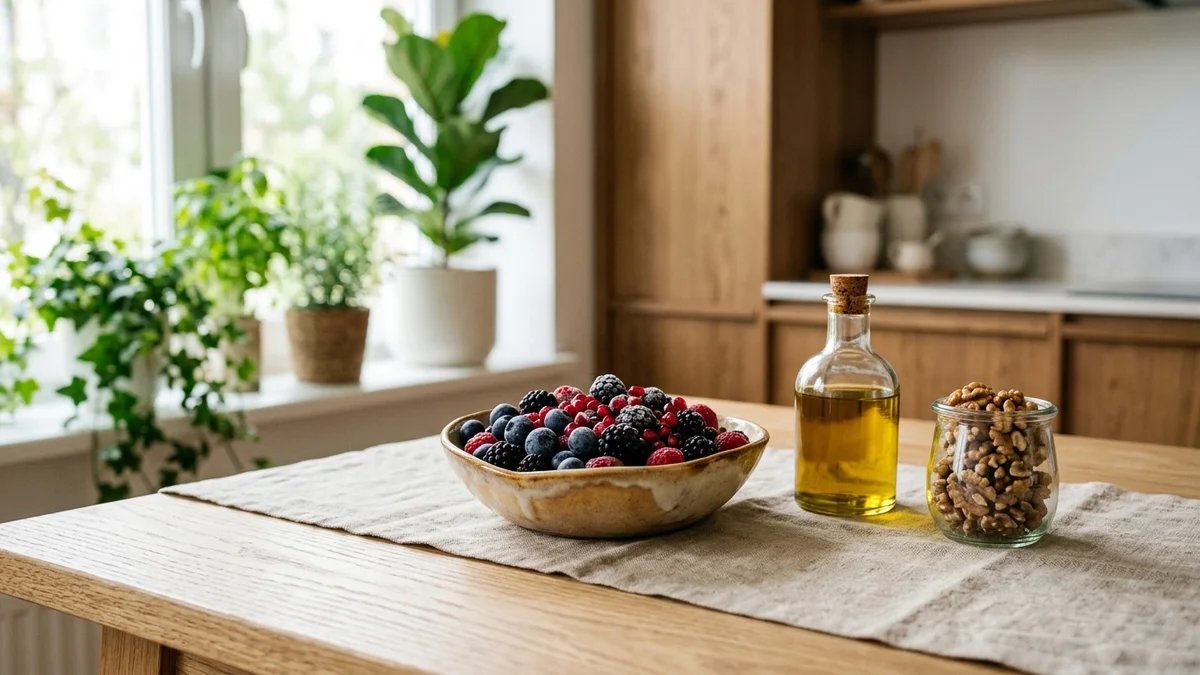
- → Inflammatory Signals: Caloric restriction consistently attenuates circulating pro-inflammatory senescence-associated secretory phenotype (SASP) markers in human blood.
- → Cellular Clearance: Human clinical evidence demonstrating that dietary interventions directly purge senescent cell numbers or unlock cell cycle arrest remains scarce.
- → Natural Senolytics: Clinical trials evaluating plant compounds such as fisetin in humans are few in number and exhibit contradictory outcomes.
- → Bioavailability Hurdle: Oral absorption of botanical senolytics through the gastrointestinal tract is notoriously poor, drastically limiting tissue delivery.
⚖️ Medical Disclaimer: This content is strictly for informational and educational purposes; it does not constitute clinical medical advice, formal diagnosis, or substitute for professional medical care.
In Brief
- Nutritional protocols like caloric restriction reliably dampen circulating inflammatory signals secreted by senescent “zombie” cells in human blood [1].
- However, direct clinical proof that dietary choices or oral supplements physically eliminate senescent cell burden in living human tissue remains unproven and highly heterogeneous [1, 4].
- For healthy adults, evidence confirms that overall dietary quality, caloric moderation, and whole plant foods far outweigh reliance on unproven anti-aging pills [1, 2].
When you step into your forties or fifties, it is easy to attribute persistent morning fatigue and slower physical recovery solely to career demands or sleepless nights. Yet waking up feeling stiffer and needing longer to bounce back from exertion often feels like an inescapable reality of aging. In response, millions search for an anti-aging secret—a hidden superfood or miracle longevity pill.
In recent years, one biological concept has dominated longevity research: cellular senescence. Under normal circumstances, cells reaching the end of their replicative lifespan undergo programmed cell death (apoptosis) and are cleanly cleared by the immune system. Senescent cells, however, permanently arrest division yet refuse to die [1, 3]. Like decaying fallen logs in a healthy forest, they linger in tissue microenvironments. Even worse, they continuously secrete a toxic cocktail of inflammatory cytokines, chemokines, and matrix metalloproteinases known as the Senescence-Associated Secretory Phenotype (SASP) [1, 5]. This toxic secretion damages healthy neighboring cells and drives systemic tissue aging [1, 5].
Can dietary modifications or trending natural senolytic supplements genuinely deactivate these destructive signals? A comprehensive systematic review consolidating 27 human clinical trials across 3,811 individuals provides an evidence-based reality check: while diet alters inflammatory markers, definitive proof of senescent cell clearance in humans remains inconclusive [1].
Can Food on Your Plate Silence Senescent Cell Signals?
Dietary modifications can significantly lower circulating SASP-related inflammatory biomarkers in the bloodstream [1]. However, reducing inflammatory smoke is not the same as extinguishing the cellular fire [1].
When investigators synthesized findings from 27 clinical trials comprising 3,811 participants, they observed a multi-layered biological pattern [1]. Intentional caloric restriction reliably depressed circulating pro-inflammatory mediators and shifted transcriptomic aging profiles [1]. Yet, core intracellular cell cycle arrest machinery—specifically cyclin-dependent kinase inhibitors like CDKN2A/p16 and CDKN1A/p21—showed minimal changes [1]. Similarly, mean telomere length showed no statistically significant lengthening following dietary interventions [1].
In practical terms: eating less and eating better may quiet the toxic, inflammatory exhaust that senescent cells pump into circulation, but it does not necessarily evict the senescent cells themselves [1].
What Do Calorie Mimetics and Polyunsaturated Fats Achieve?
Compounds that mimic the biochemical cues of caloric restriction demonstrate favorable actions, particularly when cellular metabolism is stressed [1].
Researchers evaluated pharmacological calorie restriction mimetics like metformin and rapamycin [1]. These agents did not yield identical benefits across all contexts; clinical advantages were most pronounced when individuals experienced underlying metabolic dysregulation or insulin resistance [1]. In parallel, supplementation with omega-3 polyunsaturated fatty acids helped lower specific circulating markers of systemic inflammation [1]. Nonetheless, randomized human trials exploring nutraceutical senolytics remain sparse, presenting heterogeneous and preliminary results [1].
From Strawberries to Pomegranates: Can Botanicals Purge Zombie Cells?
Natural polyphenols display impressive senolytic efficacy in laboratory cell cultures, yet translating these findings to human physiology presents formidable biological hurdles [4, 5].
Longevity medicine focuses on 4 prominent natural compounds [2]:
- Spermidine: Concentrated in wheat germ, aged cheese, and fermented soy [2]. It directly stimulates systemic macroautophagy, the cell’s internal recycling mechanism [2].
- Fisetin: A naturally occurring flavonol found in strawberries and apples that exhibits senolytic properties in preclinical models [2, 4].
- Berberine: Extracted from botanical roots; activates adenosine monophosphate-activated protein kinase (AMPK) to regulate energy homeostasis [2].
- Urolithin A: A postbiotic metabolite produced by the gut microbiome upon digesting ellagitannins from pomegranates and walnuts; drives mitochondrial renewal (mitophagy) [2].
Among these, fisetin has been widely hailed as a natural senolytic agent capable of selectively destroying senescent cells [2, 4]. Out of 34 registered clinical trials investigating fisetin, only 4 completed studies currently have published clinical data [4]. While some reported improvements in isolated inflammatory indicators, others demonstrated zero significant clinical benefit [4]. Due to small sample sizes and differing study designs, concluding that fisetin rejuvenates human tissues remains scientifically premature [4].
Furthermore, botanical polyphenols suffer from notoriously low oral bioavailability; they are poorly absorbed in the human gut and undergo rapid hepatic glucuronidation [5]. Only an infinitesimal fraction of what is swallowed reaches peripheral tissues or crosses the blood-brain barrier [5].
Evidence Assessment
| Finding | Evidence Level |
|---|---|
| Caloric restriction reduces circulating SASP inflammatory secretions | 🟢 Robust |
| Diet directly eliminates physical senescent cell count in human tissue | 🔴 Insufficient |
| Natural compounds like fisetin slow biological aging in human trials | 🟡 Emerging |
| Berberine targeting AMPK and Urolithin A stimulating mitophagy | 🟡 Emerging |
💡 What Do These Confidence Tiers Signify?
- 🟢 Robust: Confirmed by multiple independent randomized human trials and clinical consensus.
- 🟡 Emerging: Supported by smaller patient cohorts or preliminary laboratory models.
- 🔴 Insufficient: Lacking human trial substantiation, contradictory, or restricted to cell/animal models.
Daily Life Applications
Nutrient-dense foods are not pharmacological cure-alls, and science has not discovered an overnight shortcut to cellular rejuvenation [1, 4].
Nevertheless, clinical evidence suggests foundational lifestyle guidelines:
- Practice Caloric Moderation: Avoiding chronic caloric excess and postprandial glucose spikes remains the single most reliable strategy to dampen systemic SASP secretions [1].
- Diversify Plant Polyphenols: Incorporate apples, strawberries, pomegranates, walnuts, and green tea into your weekly diet to supply diverse botanical bioactives [2].
- Prioritize Omega-3 Fatty Acids: Ensuring adequate intake of marine omega-3s supports cellular membrane fluidity and helps resolve systemic inflammation [1].
Optimal human clinical dosages for isolated compounds like fisetin or berberine remain under active scientific investigation [4, 5].
Safety Considerations & Clinical Surveillance
The label “natural” does not mean a supplement is universally safe or devoid of adverse interactions [2].
Berberine, for instance, remains largely unabsorbed in the intestinal lumen where it alters gut microbial composition and can inhibit cytochrome P450 enzymes, interfering with prescription drugs [2]. Furthermore, high-dose polyphenol supplements can stress hepatic pathways [5].
Crucially, patients with chronic renal disease, diabetes on active medications, pregnant or nursing women, and elderly individuals on polypharmacy were excluded from these trials. Medical consultation is mandatory prior to commencing high-potency senolytic supplements [1, 2, 4].
Scientific Basis & Key Studies
- Lin et al. (2026): Systematic review of 27 clinical trials (3,811 participants) evaluating nutritional interventions on cellular senescence biomarkers; demonstrated that caloric restriction consistently reduces circulating SASP factors, but found no direct modulation of p16, p21, or telomere length [1].
- Rzeski & Rzeska (2026): Comprehensive review examining spermidine, fisetin, berberine, and urolithin A across autophagy, senolysis, and mitophagy pathways; highlighted the severe deficit of human clinical trial verification [2].
- Olinger & Basisty (2026): Clinical compendium analyzing circulating senescence biomarkers (e.g., GDF15, Activin A), offering a framework for future aging diagnostics [3].
- Sandoval-Caballero et al. (2026): Systematic evaluation of 34 registered fisetin clinical trials (4 completed); highlighted heterogeneous findings, low bioavailability, and sample size limitations in human translation [4].
- Salas-Venegas et al. (2026): Review of senotherapeutics in neurodegeneration; identified blood-brain barrier transport limitations and poor metabolic stability as core challenges for natural senolytics [5].
References
- [1] Lin Y, Altulea A, Demaria M. Effects of nutritional interventions on biomarkers of cellular senescence in humans: A systematic review. Ageing Res Rev. (2026). PMID: 42401265 · DOI: 10.1016/j.arr.2026.103224 · PubMed
- [2] Rzeski W, Rzeska W. Natural Bioactive Compounds Targeting Key Hallmarks of Aging: Functional Food Potential of Spermidine, Fisetin, Berberine, and Urolithin A. Nutrients. (2026). PMID: 42588134 · DOI: 10.3390/nu18152511 · PubMed
- [3] Olinger B, Basisty N. A compendium of circulating biomarkers of senescence in humans: Insights on mechanistic impact across health domains and modulation by therapeutic interventions. Ageing Res Rev. (2026). PMID: 42448049 · DOI: 10.1016/j.arr.2026.103254 · PubMed
- [4] Sandoval-Caballero C, Roemer Z, Kotz CM, Puskarich MA, Mavanji V, Schmidt EL, Sibley SD. Clinical Translation of Fisetin for Age-Related Diseases: Current Evidence and Future Opportunities. Nutrients. (2026). PMID: 42796982 · DOI: 10.3390/nu18182999 · PubMed
- [5] Salas-Venegas V, López-Diazguerrero NE, Ramírez-Carreto RJ, Konigsberg M, Chavarría A. Targeting cellular senescence through nutritional senotherapeutics in brain aging and neurodegenerative diseases. Front Nutr. (2026). PMID: 42609608 · DOI: 10.3389/fnut.2026.1824908 · PubMed
For informational purposes only; consult a physician for medical diagnosis or treatment.